
Why Choose a Self-Drive Roof Tent Safari in Tanzania?
Tanzania is one of Africa’s crown jewels when it comes to wildlife safaris. Home to the iconic Serengeti, the breathtaking Ngorongoro Crater, the untamed Selous Game Reserve, and dozens of other spectacular destinations, Tanzania offers an unparalleled safari experience. While guided lodge safaris remain popular, a growing number of adventurous travelers are discovering the extraordinary freedom that comes with a self-drive 4×4 Land Cruiser roof tent rental.
Renting a self-drive 4×4 Land Cruiser fitted with a rooftop tent allows you to travel on your own schedule, camp under the African stars in prime wildlife areas, access remote tracks that minibuses cannot reach, and experience the raw, unfiltered wilderness of Tanzania at your own pace. It is an experience that blends the thrill of off-road adventure with the serenity of sleeping meters above the ground, surrounded by nature.
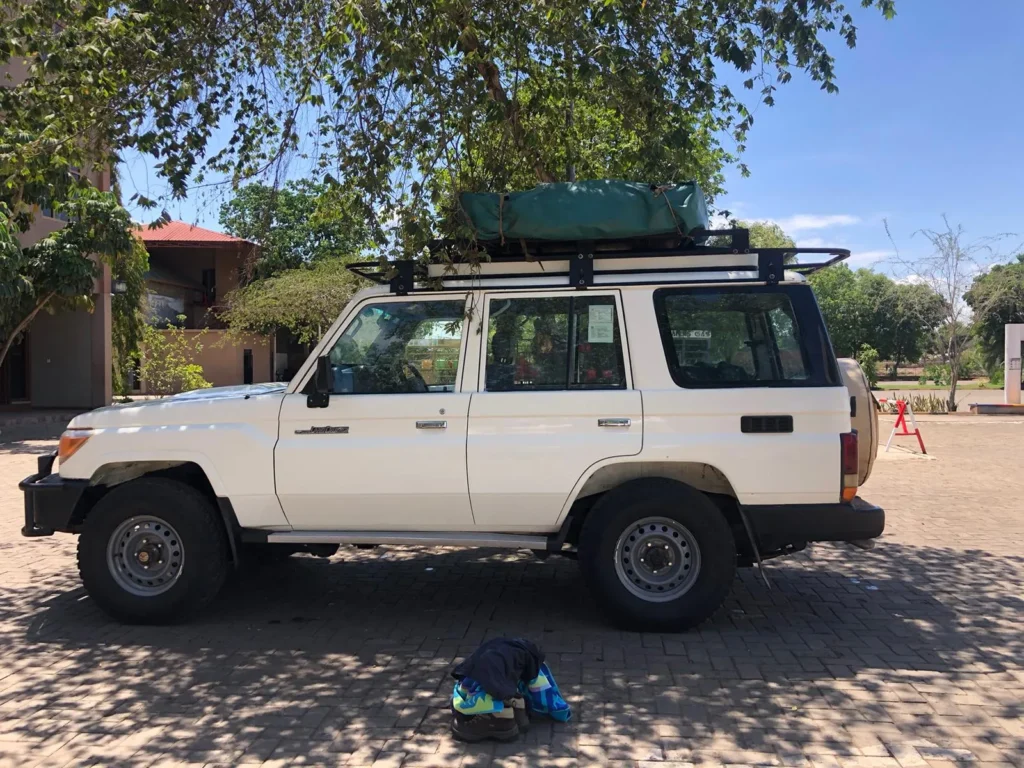
This comprehensive guide covers everything you need to know about self-drive 4×4 Land Cruiser roof tent rentals in Tanzania — from vehicle options and pricing, to essential gear, top destinations, driving tips, and safety guidelines. Whether you are a seasoned overlander or a first-time safari explorer, this article will help you plan the perfect self-drive adventure across Tanzania’s magnificent landscapes.
Why the Toyota Land Cruiser is the Ideal Safari Vehicle
When it comes to self-drive safaris in Tanzania, not all vehicles are equal. Tanzania’s national parks and game reserves feature challenging terrain including deep sand, river crossings, rocky trails, muddy tracks, and high-clearance bush roads. The Toyota Land Cruiser has earned its legendary status as the ultimate African safari workhorse for very good reasons.
Unmatched Reliability and Durability
The Toyota Land Cruiser has been the vehicle of choice for East African safaris for over five decades. Its robust construction, powerful engine options (both petrol V8 and diesel), and exceptional ground clearance make it capable of handling virtually any terrain Tanzania can throw at it. Parts and service centres are readily available across Tanzania, making repairs straightforward if needed — a critical advantage in remote areas.
Superior Off-Road Capability
Land Cruisers are equipped with full-time or part-time four-wheel drive (4WD) systems, locking differentials, and high and low range transfer cases. These features are essential for navigating the deep sand of the Serengeti, the steep trails of Ngorongoro Crater rim, and the flooded tracks of the wet season. The high ground clearance (typically 225–230mm) ensures the vehicle glides over rocky outcrops and rutted bush tracks without damage.
Spacious Interior for Extended Trips
Land Cruiser models commonly rented for safaris — the 76 Series Station Wagon, 79 Series Single and Double Cab, and 200 Series — offer generous interior space. This is important for carrying camping equipment, food supplies, water, fuel reserves, and personal luggage for multi-week overland expeditions. The fold-flat rear seats in wagon models create a large, flat loading area ideal for gear organisation.
Rooftop Tent Compatibility
The robust roof rack systems standard on most safari-spec Land Cruisers can support the weight of quality rooftop tents (typically 40–80kg) plus campers with ease. The high roof height also provides a safe sleeping position above potential ground-level hazards including insects, snakes, and nocturnal wildlife — an important consideration when camping in unfenced areas.
Understanding Rooftop Tents: Types, Features & Benefits
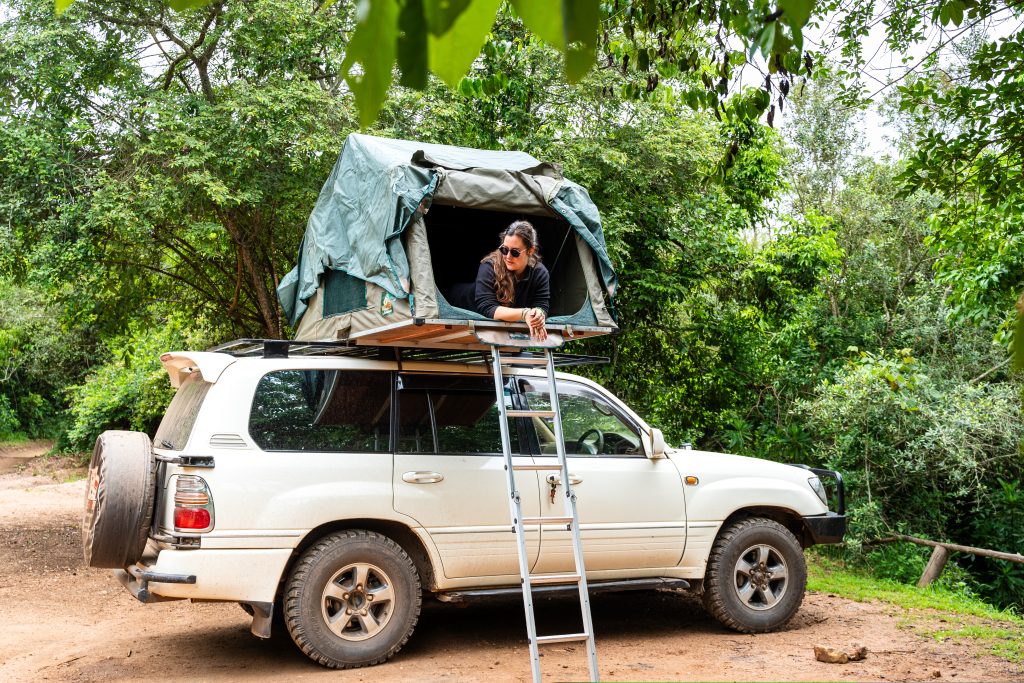
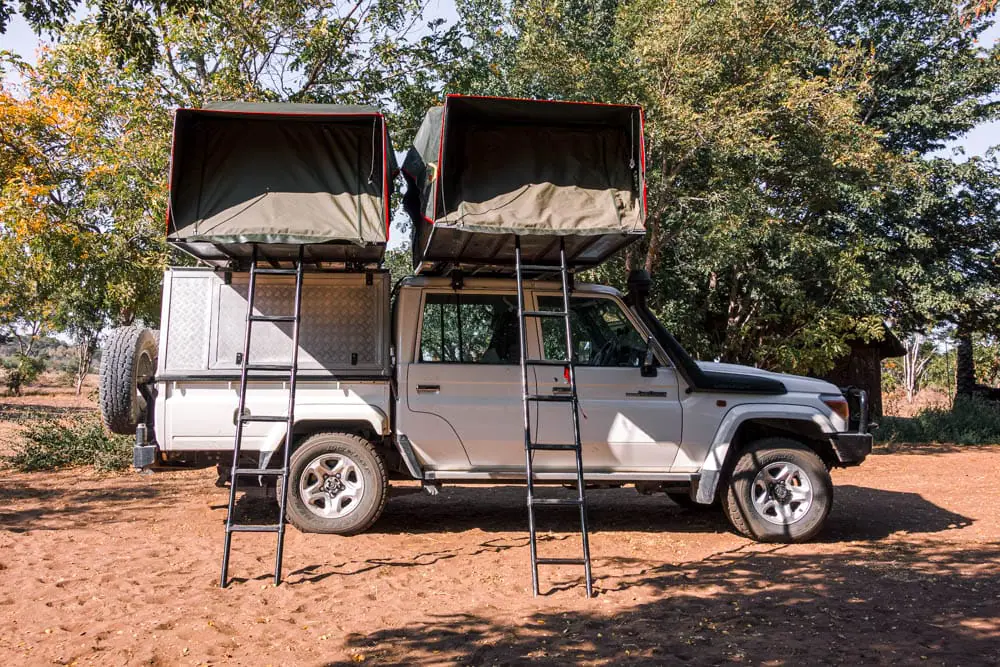
A rooftop tent (RTT) transforms your Land Cruiser into a mobile, self-contained camping unit. Rather than sleeping on the ground in a traditional tent, you sleep on a comfortable, elevated platform mounted directly to your vehicle’s roof rack. For safari purposes, this offers significant practical and safety advantages.
Types of Rooftop Tents Available
1. Soft-Shell Rooftop Tents
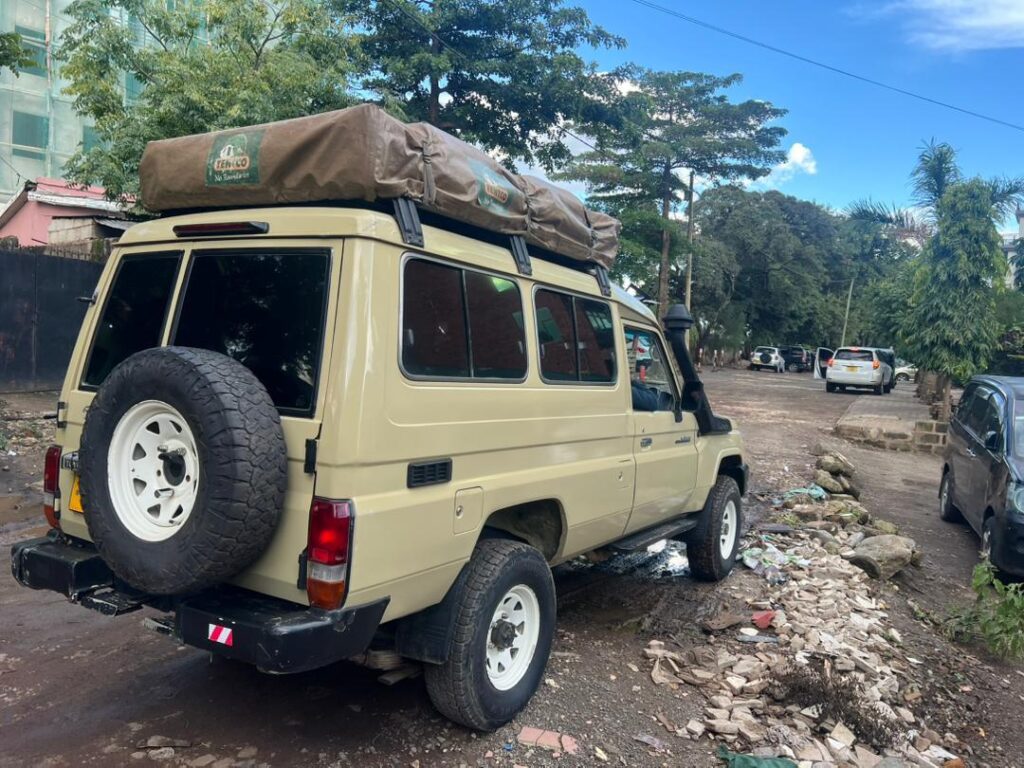
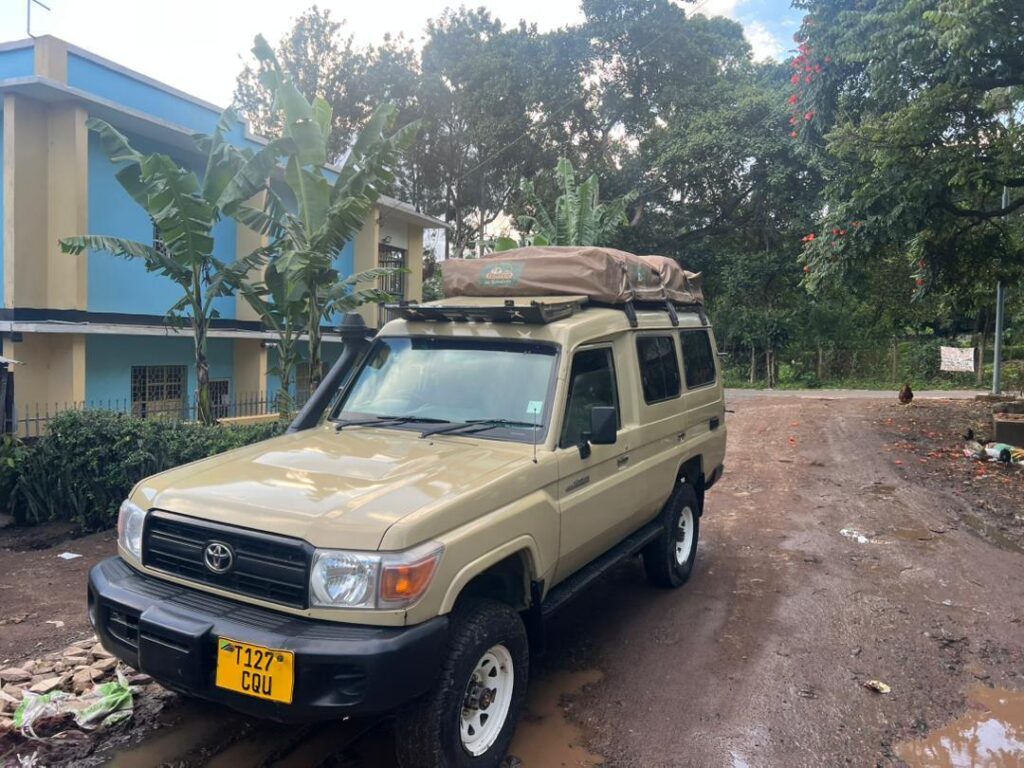
Soft-shell tents use a folding mechanism with a canvas or nylon outer shell. They are lightweight (35–50kg), cost-effective, and offer good ventilation in Tanzania’s warm climate. Most feature multiple mesh windows and a skylight — perfect for stargazing over the Serengeti. Setup time is typically 2–5 minutes. Brands commonly found on rental vehicles include Hannibal, Howling Moon, and Bush Baby.
2. Hard-Shell Rooftop Tents
Hard-shell (or hard-top) tents use a clamshell or pop-up mechanism with a fibreglass or ABS plastic shell. They offer superior durability, weather resistance, and faster setup (under 60 seconds on some models). Although heavier (50–80kg), they reduce wind drag during driving and are extremely popular on long-distance overlanding trips. Brands like Front Runner, CVT, and Maggiolina are well-regarded in this category.
Key Features to Look For in a Rental Rooftop Tent
- High-density foam mattress (75mm or thicker) for comfortable sleeping
- Mosquito-proof mesh windows and entrance — essential in malaria zones
- Waterproof outer shell rated for heavy tropical rainfall
- Integrated shoe bag or boot tray to keep the tent interior clean
- Strong, extendable ladder with wide steps for safe entry and exit
- Interior LED lighting for night-time convenience
- Adequate ventilation to handle Tanzania’s heat and humidity
- Reinforced awning attachment points for shade in daytime camps
Benefits of Rooftop Tent Camping on Safari
- Sleep safely above ground level, away from insects, snakes, and curious animals
- Camp almost anywhere — no need to find a campsite with tent platforms
- Exceptional views at dawn when wildlife is most active near camp
- Faster setup and pack-down compared to traditional tents
- Keeps sleeping area clean and dry even in wet season conditions
- Provides a psychological sense of security when camping in unfenced areas
Land Cruiser Models Commonly Available for Rental
Tanzania rental operators typically offer several Land Cruiser variants, each suited to different trip styles and group sizes. Understanding the differences helps you select the right vehicle for your specific safari.
Toyota Land Cruiser 76 Series Station Wagon
The 76 Series is considered by many overlanders as the pinnacle of the Land Cruiser range for off-road touring. Powered by a 4.5-litre V8 turbo-diesel engine producing around 151kW, it delivers exceptional torque for demanding terrain. The wagon body provides seating for 5 passengers and a large load area. Its coil-spring suspension offers a better ride than its leaf-spring predecessors, while retaining legendary off-road capability. Ideal for couples or small groups of 2–3 people.
Toyota Land Cruiser 79 Series Double Cab
The 79 Series Double Cab (often called the DC79) combines a robust ute/pickup truck body with a spacious double cab seating 5 passengers. The tray/bed can carry large amounts of gear, fuel, and water. It is particularly popular with overlanders who prefer to run a separate gear trailer or carry large amounts of supplies. Its leaf-spring rear suspension is extremely robust and well-suited to heavily laden expedition use. Excellent for families or groups requiring maximum carrying capacity.
Toyota Land Cruiser 200 Series (GX/VX)
The 200 Series represents the luxury end of the Land Cruiser spectrum. With seating for up to 8 passengers, automatic transmission, electronic off-road aids (Multi-Terrain Select, Crawl Control), and sophisticated interior amenities, it provides a more comfortable driving experience. It is an ideal choice for families or those who prefer a more refined vehicle without sacrificing capability. Rental rates are typically higher than the 76 and 79 Series.
Toyota Land Cruiser Prado 150 Series
For travellers on tighter budgets or those sticking to the main tourist circuits, the Prado 150 Series offers a capable and comfortable alternative. While not as capable as the full Land Cruiser in extreme terrain, it is perfectly adequate for Serengeti and Ngorongoro safaris on established game drive tracks. Its more refined ride and lower fuel consumption make it an economical option.
What’s Typically Included in a Roof Tent 4×4 Rental Package
Reputable rental companies in Tanzania offer well-equipped vehicles that include far more than just the car and tent. A comprehensive rental package typically includes the following:
Standard Vehicle Equipment
- Rooftop tent with foam mattress, sleeping bag/sheets (varies by operator)
- Roof rack and jerry can holders for extra fuel
- Two spare tyres (full-size) plus all tyre changing equipment
- High-lift jack, shovel, tow rope/snatch strap, and recovery boards
- Comprehensive tool kit and vehicle-specific spare parts (filters, belts, fuses)
- Portable fire extinguisher and first aid kit
- Vehicle tracking device (GPS) for security and emergency response
Camping & Kitchen Equipment
- Camp chairs (2–4) and folding camp table
- 2-burner gas camp stove with sufficient gas canisters
- Full camp kitchen kit: pots, pans, plates, cups, cutlery, chopping boards
- Cool box / fridge (12V compressor fridge on premium packages)
- Water containers (20–40 litres) and water purification tablets
- Washing-up basin, biodegradable soap, and cleaning equipment
- Headlamps and lanterns for camp illumination
Navigation & Communication
- Detailed paper maps of Tanzania’s national parks
- Downloaded offline GPS maps (Maps.me, Gaia GPS, or similar)
- Local SIM card with data (some operators)
- HF/VHF radio or satellite phone on request (additional fee)
Rental Rates and Pricing Guide
Rooftop tent 4×4 rental prices in Tanzania vary based on vehicle model, rental duration, season, and the level of equipment included. The following table provides a general pricing guide. Always request a detailed, all-inclusive quote from your rental company.
Duration | Vehicle Type | Daily Rate (USD) | Included |
1–3 Days | Land Cruiser 76 Series | $180 – $220 | Roof tent, basic kit |
4–6 Days | Land Cruiser 79 Series | $160 – $200 | Roof tent + kitchen kit |
7–13 Days | Land Cruiser 200 Series | $150 – $185 | Full camping package |
14+ Days | Any model (discounted) | $130 – $165 | Full package + extras |
Note: Prices are indicative and subject to change. Peak season (July–October, December–January) may attract a 15–25% surcharge. Some operators include park entry fees in packages; most do not. Always confirm what is and is not included before booking.
Additional Costs to Budget For
- Tanzania National Park entry fees: $50–$70 USD per person per day (Serengeti, Ngorongoro)
- Camping fees: $20–$50 USD per night per site within national parks
- Fuel: Diesel costs approximately TZS 3,000–3,500 per litre (approx. $1.15–$1.35 USD)
- Optional GPS tracker subscription: $10–$20 USD per day
- Border crossing fees if travelling to Kenya or Uganda
- Personal travel and medical insurance (strongly recommended)
- Driver’s excess insurance waiver: $15–$25 USD per day
Top Self-Drive Destinations in Tanzania
Tanzania’s diverse geography and exceptional wildlife make it one of the world’s finest self-drive safari destinations. Below are the top national parks and game reserves accessible to self-drive 4×4 travellers.
Park / Reserve | Region | Best Season | Highlights |
Serengeti National Park | Northern Tanzania | Year-round | Great Migration, Big Five, Endless plains |
Ngorongoro Crater | Northern Circuit | Year-round | World’s largest caldera, dense wildlife |
Tarangire National Park | Northern Circuit | Jun – Oct | Elephant herds, giant baobabs |
Selous Game Reserve | Southern Tanzania | Jun – Oct | Remote wilderness, hippo-rich rivers |
Ruaha National Park | Southern Circuit | Jun – Oct | Lions, wild dogs, rugged terrain |
Mikumi National Park | Southern Circuit | Year-round | Safari gateway, accessible wild |
Lake Manyara NP | Northern Circuit | Nov – Jan | Tree-climbing lions, flamingos |
Katavi National Park | Western Tanzania | Jul – Oct | Off-the-beaten-path, hippos, crocs |
The Northern Circuit: Tanzania’s Classic Safari Route
The Northern Circuit is Tanzania’s most popular and well-developed safari region, making it ideal for first-time self-drive visitors. The circuit typically takes 7–14 days and links Arusha (the safari hub) with Lake Manyara, Tarangire, the Ngorongoro Crater, and the Serengeti. Roads are generally well-maintained by African standards, though 4WD remains essential, especially in the Serengeti and during the wet season.
The iconic Great Migration — when millions of wildebeest and zebra traverse the Serengeti ecosystem in search of fresh grass — is one of the world’s greatest natural spectacles. Self-drive travellers can follow the migration at their own pace, spending extra time at river crossing points or following the herds without the pressure of a scheduled tour.
The Southern Circuit: Off the Beaten Track
The Southern Circuit — encompassing Selous Game Reserve (Nyerere National Park), Ruaha National Park, Mikumi, and Udzungwa Mountains — offers a far more remote and exclusive safari experience. Self-drive travellers here are often the only vehicle in sight, experiencing wildlife encounters free from the crowding sometimes found in the northern parks. The roads require a genuine 4×4, and expedition-level preparation is advisable.
Western Tanzania: The Ultimate Wilderness
Katavi National Park, Mahale Mountains (chimpanzee trekking), and Gombe Stream in western Tanzania represent Tanzania’s last true frontiers. These areas are extremely remote, with very limited infrastructure. Self-drive here is only recommended for highly experienced overlanders with full expedition equipment and satellite communication devices. The rewards, however — pristine wilderness and Africa’s last great unexplored safari regions — are extraordinary.
Best Time to Visit for a Self-Drive Roof Tent Safari
Dry Season: June to October (Peak Season)
The dry season is widely considered the best time for wildlife viewing in Tanzania. Animals concentrate around permanent water sources, vegetation is lower (improving visibility), and roads are at their most accessible. Temperatures are warm but not extreme (20–28°C). This is peak season, so park entry fees are highest and popular campsites should be booked well in advance.
Short Dry Season: January to February
A brief dry spell between the long and short rains, January–February offers excellent wildlife viewing and significantly fewer tourists. This period coincides with the calving season in the Serengeti southern plains — one of the most dramatic wildlife events, as thousands of wildebeest calves are born and immediately face pressure from predators. Prices are lower than peak season.
Green Season: November to May (Low Season)
The wet/green season brings lush landscapes, dramatic skies ideal for photography, and dramatic reductions in both park fees and rental prices. Birdlife is exceptional, with migratory species present. However, some tracks become impassable, river crossings dangerous, and camping uncomfortable in heavy downpours. The 4WD capability of the Land Cruiser is put to maximum test in this season — only recommended for experienced off-road drivers.
Essential Self-Drive Tips and 4×4 Driving Techniques
Tanzania’s roads and tracks present unique challenges that even experienced drivers from other countries may not be familiar with. The following tips will help ensure your self-drive safari is safe, successful, and enjoyable.
Before You Set Off
- Attend any pre-departure 4×4 briefing offered by your rental company — these are invaluable
- Study your route thoroughly using both paper maps and digital offline navigation
- Check all fluid levels: engine oil, coolant, transmission fluid, power steering fluid, and brake fluid
- Inspect all tyre pressures including both spare tyres before each day’s driving
- Confirm you have sufficient fuel for the day’s route — always depart with a full tank
- Notify your rental company and accommodation of your daily itinerary
Driving in Sand
The Serengeti features extensive sections of sandy tracks, particularly in the western corridor and near the Mara River. When driving in sand, reduce tyre pressure to 1.4–1.6 bar (20–23 PSI) to increase the footprint and float over the sand. Maintain momentum and avoid sudden braking or sharp turns. If you become stuck, use recovery boards (MaxTrax) to gain traction, or winch out using a tree as an anchor point.
River Crossings
Tanzania’s wet season creates numerous river crossings that can be deceptively dangerous. Always walk a crossing before driving through it — check the depth, bottom firmness, and identify any submerged obstacles or drop-offs. Select low-range 4WD, and cross slowly and steadily at a consistent speed (creating a bow wave in front of the vehicle). Never attempt a crossing if the current is strong or the water is above the vehicle’s wading depth (typically 700mm for Land Cruisers).
Bush Track Navigation
In remote areas, tracks can be faint, multiple, and potentially leading in different directions. Always cross-reference your GPS with the paper map. Tanzania’s national parks have strict no off-track rules — never drive off established tracks, as this damages ecosystems and is heavily penalised. If unsure of the correct route, stop and assess — never guess and drive into unknown terrain as darkness approaches.
Wildlife Safety and Camping Protocols
Camping in Tanzania’s national parks means sharing the wilderness with Africa’s most powerful and potentially dangerous wildlife. Understanding and respecting wildlife behaviour, combined with sensible precautions, keeps both you and the animals safe.
General Wildlife Safety Rules
- Never exit your vehicle in unfenced areas without a ranger or unless in designated areas
- Never approach wildlife too closely — maintain minimum distances (50m from predators, 30m from other game)
- Do not feed any wildlife — this is illegal in Tanzania and creates dangerous habituation
- Secure all food in your vehicle or in provided bear-proof/animal-proof containers at camp
- Never leave food, scented items, or rubbish outside your vehicle or tent overnight
- Use a headlamp when moving around camp at night — announce your presence and check your surroundings
- Always zip your rooftop tent closed, including when you are inside it at night
Campfire Safety
Many camps in Tanzania prohibit open campfires due to fire risk during the dry season. Where campfires are permitted, use designated fire pits, never light fires under or near trees, and ensure fires are completely extinguished before sleeping or departing. Always carry enough gas for your camp stove and do not rely on being able to light fires for cooking.
Medical Considerations
Tanzania is a malaria-endemic country. Consult a travel medicine professional before departure and start an appropriate antimalarial prophylaxis regime. Apply DEET-based insect repellent at dawn and dusk, use permethrin-treated clothing, and sleep in the fully enclosed rooftop tent with mesh securely fastened. Carry a comprehensive first aid kit including rehydration salts, broad-spectrum antibiotics, and wound care supplies. Know the location of the nearest hospital or clinic for each leg of your journey.
How to Book a Self-Drive 4×4 Rooftop Tent Rental in Tanzania
Booking the right rental vehicle from a reputable company is the most critical step in planning your self-drive safari. Follow this step-by-step process to ensure a smooth, safe experience.
Step-by-Step Booking Process
- Define your itinerary: decide which parks you want to visit, estimated duration, and desired vehicle model
- Research rental companies: look for operators with TATO (Tanzania Association of Tour Operators) membership, customer reviews, and transparent pricing
- Request a detailed quote: ensure the quote is itemised and specifies exactly what equipment is included
- Verify vehicle condition: ask for photos or a video walk-around of the specific vehicle you will be renting
- Confirm insurance coverage: understand what is and is not covered, including excess amounts and excluded scenarios
- Check driver’s licence requirements: an international driving permit (IDP) plus your national licence is required
- Pay the deposit: most reputable operators require 30–50% deposit to secure the booking
- Complete pre-departure orientation: attend or watch the vehicle handover briefing carefully
What to Check at Vehicle Handover
- Record all existing dents, scratches, and damage on the pre-rental condition report and photograph everything
- Test all vehicle functions: 4WD system, difflock, winch (if fitted), fridge, lights, and recovery gear
- Confirm you understand how to operate the rooftop tent, awning, and all camp equipment
- Verify fuel level and that both spare tyres are inflated to correct pressure
- Save the rental company’s emergency contact number in your phone before departure
Top Tips for First-Time Self-Drive Safari Travellers |
✓ Start your trip with 1–2 nights near Arusha to acclimatise and check all equipment |
✓ Download offline maps of Tanzania before you leave — mobile data coverage in parks is minimal |
✓ Carry at least 40 litres of extra fuel in approved jerry cans — fuel stations are sparse in the south and west |
✓ Book campsites inside national parks well in advance, especially for peak-season Serengeti trips |
✓ Travel with a fully charged power bank and a 12V vehicle charger for all essential devices |
✓ Carry at least $500 USD cash in small denominations for park fees, emergency purchases, and tips |
✓ Join overlanding Facebook groups and forums for Tanzania — real-time road and track condition reports are invaluable |
✓ Always inform someone of your daily route — send a check-in message each evening |
Responsible and Sustainable Safari Travel
Self-drive safaris carry a particular responsibility. As an independent traveller navigating Tanzania’s precious wilderness, your decisions directly impact the environment, the wildlife, and the communities that depend on conservation-based tourism. Embrace the following principles to travel responsibly.
Leave No Trace
Carry all waste out of the parks — including grey water from washing. Use biodegradable soaps, never dump chemicals near watercourses, and take all rubbish to approved disposal points at park gates or in the nearest towns. Tanzania’s parks are funded in significant part by the fees visitors pay — your responsible behaviour helps justify and sustain conservation investment.
Support Local Communities
Whenever possible, purchase supplies, fuel, and services from local businesses in gateway towns such as Arusha, Moshi, Mbeya, and Iringa. Visit community-run conservancies, hire local guides for specialised activities (e.g., walking safaris, community visits), and stay at campsites that have genuine community benefit-sharing arrangements. The economic case for wildlife conservation strengthens when local communities benefit directly from tourism.
Respect Wildlife and Habitats
Stay on designated tracks at all times, never use drones within national parks without specific permits (generally prohibited), and keep noise to a minimum near wildlife. Do not use bright spotlights at night beyond designated areas, as this disrupts nocturnal wildlife behaviour. Report any poaching activity, illegal logging, or wildlife disturbance to the nearest TANAPA (Tanzania National Parks Authority) ranger post immediately.
Conclusion: Begin Your Tanzania 4×4 Adventure
A self-drive 4×4 Land Cruiser roof tent rental in Tanzania is more than just a travel option — it is a transformative adventure that places you in complete control of your African wilderness experience. From the golden plains of the Serengeti where lions rule at dawn, to the emerald hills of Ngorongoro where elephant silhouettes cross ancient calderas, to the vast, untouched southern wilderness of Ruaha and Selous, Tanzania offers the self-drive traveller a lifetime of memories in a single journey.
The Toyota Land Cruiser — trusted by explorers, conservationists, and safari professionals for over half a century — is your faithful partner through every kilometre of this adventure. With a quality rooftop tent overhead, a cooler full of supplies, a sense of curiosity, and a respect for the land and its animals, there is no more authentic way to experience the magnificence of Tanzania.
Begin your planning early, choose a reputable rental company, equip yourself well, and embrace the spirit of overland adventure. Tanzania is waiting.