
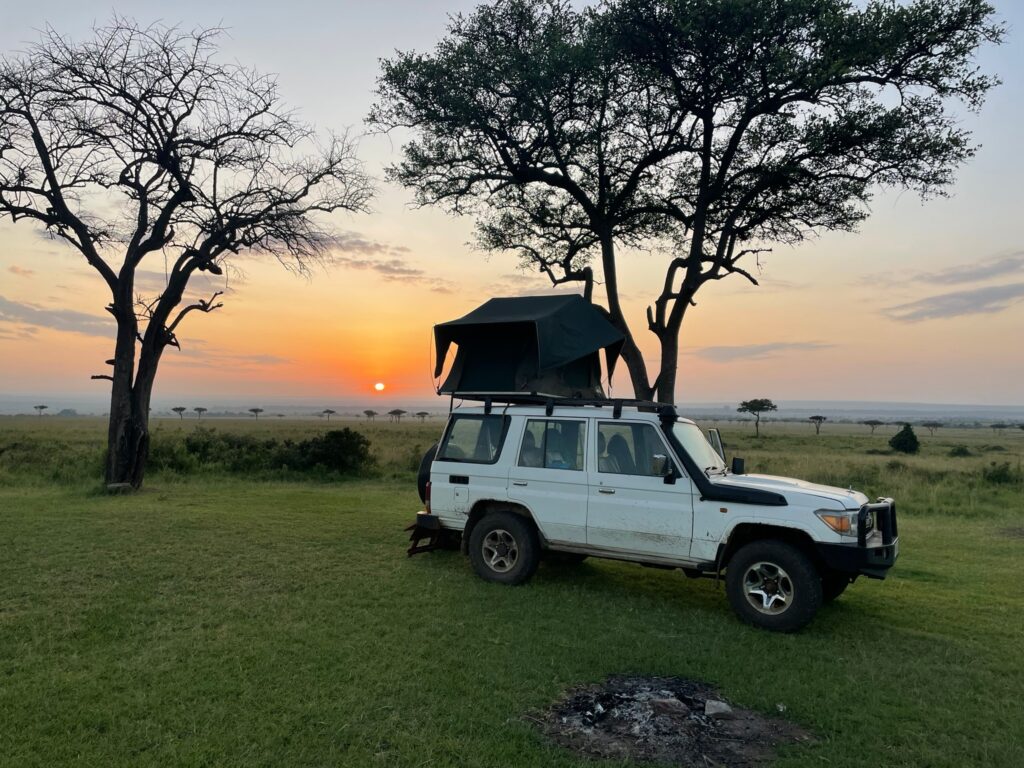
4×4 Landcruiser with rooftop Tent and Camping Rental in Dar es salaam for 2 weeks
4×4 Landcruiser with rooftop Tent and Camping Rental in Dar es salaam for 2 weeks , Tanzania is one of Africa’s most extraordinary safari destinations, home to the Serengeti, Selous Game Reserve, Ruaha National Park, Kilimanjaro, and the pristine coastline of the Indian Ocean. Exploring this vast and breathtaking country on your own terms — at your own pace, sleeping under a canopy of stars — is an experience that ranks among the world’s finest adventures.
The ideal vehicle for this journey is the Toyota Land Cruiser 4×4, widely regarded as the most capable and reliable expedition vehicle on earth. Pair it with a rooftop tent and full camping kit, and you have a self-contained, go-anywhere basecamp that puts you right in the heart of the wilderness. Dar es Salaam, Tanzania’s largest city and commercial hub, is the perfect launch point for a 14-day overland expedition.
This guide covers everything you need to know about renting a 4×4 Land Cruiser with a rooftop tent in Dar es Salaam for two weeks — from vehicle specifications and what’s included, to pricing, itinerary ideas, legal requirements, and expert tips for making the most of your safari adventure.
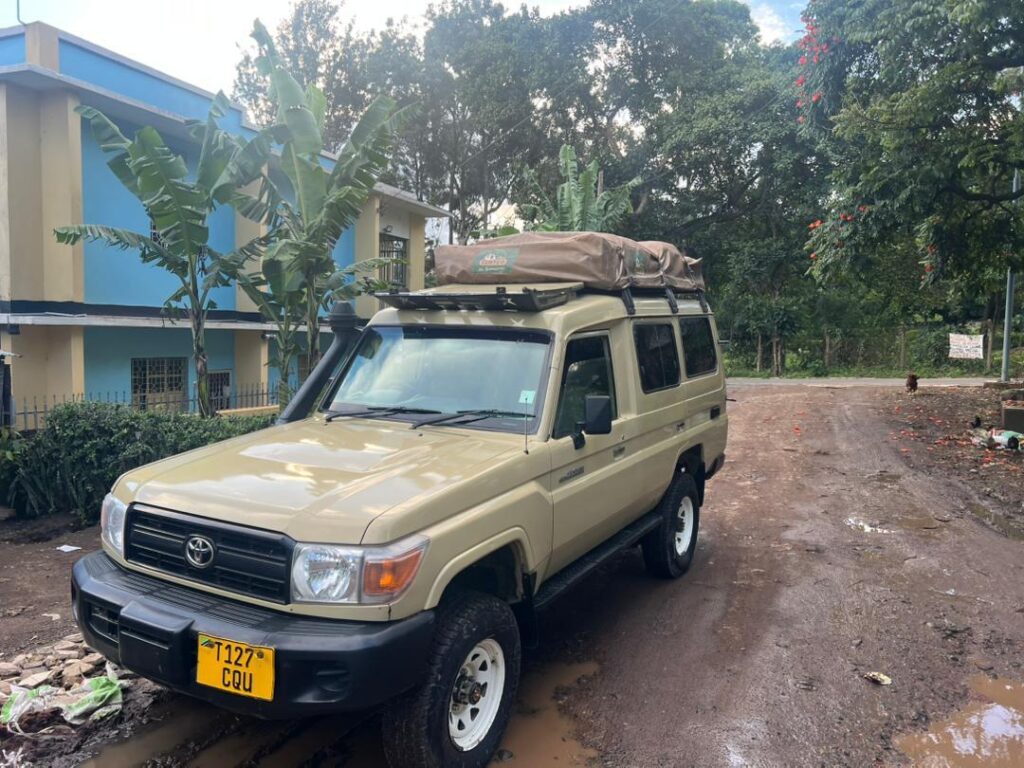
Why the Toyota Land Cruiser 4×4?
The Toyota Land Cruiser has earned its legendary reputation across decades of proven performance in the world’s harshest environments. From the Sahara to the Amazon, from the Arctic tundra to the scorching savannahs of East Africa, no other vehicle has matched its combination of off-road capability, mechanical reliability, parts availability, and long-term durability.
Vehicle Variants Available for Rental
Land Cruiser 70 Series (Hardtop / Station Wagon)
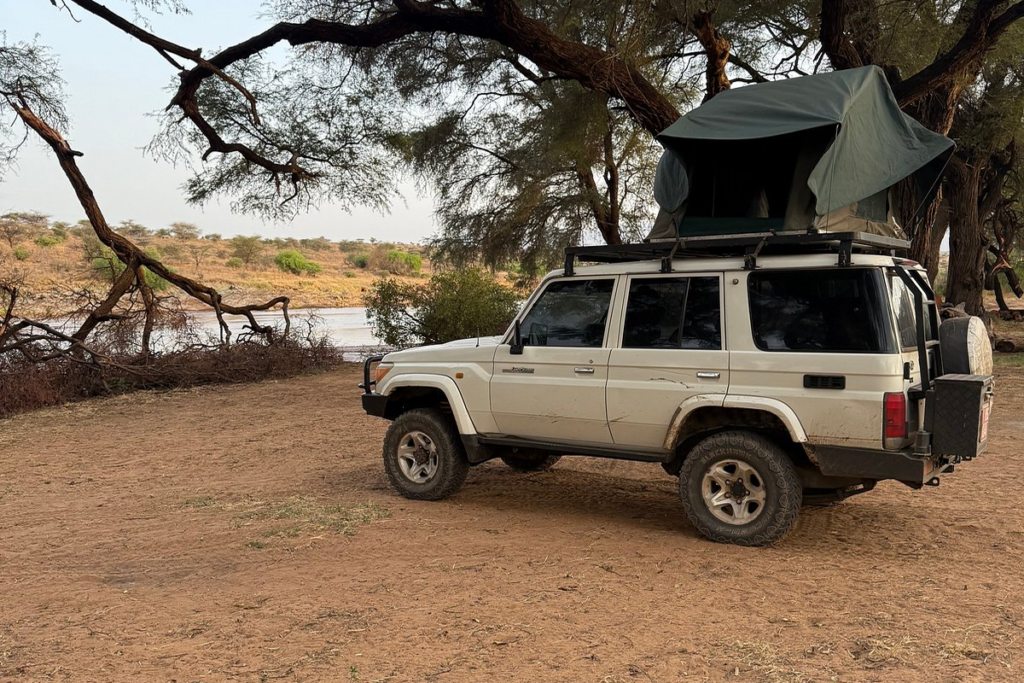
The workhorse of the fleet. The 70 Series is a go-anywhere machine built specifically for extreme off-road conditions. With a heavy-duty ladder-frame chassis, solid axles, coil-spring suspension, and a powerful 4.5L V8 diesel engine producing around 204 horsepower and 470 Nm of torque, this vehicle tackles deep sand, mud crossings, rocky trails, and river beds with ease. It is the most commonly available variant for rental in Tanzania and is the preferred vehicle for bush driving.
Land Cruiser 200 Series (V8 Luxury Expedition)
The 200 Series offers a step up in comfort and technology while retaining extraordinary off-road credentials. With Kinetic Dynamic Suspension System (KDSS), Crawl Control, Multi-Terrain Select, and a full-time 4WD system with electronic locking differentials, the 200 Series can do everything the 70 can — but with air-conditioned leather seats and a spacious interior that makes long transit days significantly more comfortable. This variant is popular for premium rentals and guided tours.
Land Cruiser Prado 150 Series
The Prado offers a middle ground between the rugged 70 Series and the luxurious 200 Series. It seats up to 7 passengers, has a modern infotainment system, and still offers genuine 4WD capability with a Torsen limited-slip differential and hill descent control. It is well-suited for families or groups of three to four who want comfort without sacrificing off-road performance.
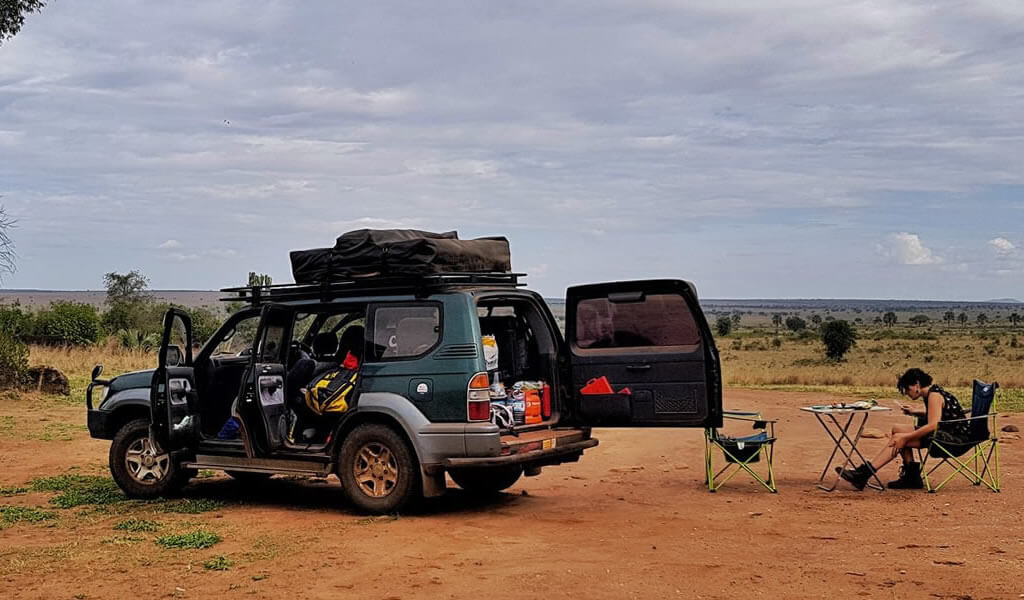
Key Technical Specifications (70 Series)
- Engine: 4.5L V8 Twin-Turbo Diesel or 4.0L V6 Petrol
- Transmission: 5-speed manual or 4-speed automatic
- Drive System: Part-time 4WD with locking front and rear differentials
- Ground Clearance: 230 mm
- Approach Angle: 36 degrees | Departure Angle: 26 degrees
- Wading Depth: 700 mm (with snorkel: up to 1,000 mm)
- Fuel Tank Capacity: 90L main + 65L auxiliary (many rentals)
- Payload Capacity: 1,000+ kg
- Tires: BF Goodrich All-Terrain 285/75R16 or similar
The Rooftop Tent: Your Mobile Base Camp
A rooftop tent (RTT) transforms your Land Cruiser into a fully self-sufficient expedition vehicle. Mounted on a robust roof rack or integrated ladder system, the tent deploys in minutes and elevates your sleeping position 2–3 metres above the ground — keeping you safely above nocturnal wildlife, away from insects, snakes, and flooding, and giving you panoramic views across the African bush.
Types of Rooftop Tents Typically Offered
Soft Shell Rooftop Tents
The most common type available in Dar es Salaam rentals. These fold-out tents feature a durable canvas shell (usually 300–600 GSM ripstop polyester/canvas blend), a built-in foam mattress, and an integrated ladder. They set up in under 3 minutes, provide excellent ventilation with mesh windows, and are weatherproof in tropical rain. Popular brands include Howling Moon, Front Runner, and Eezi-Awn.
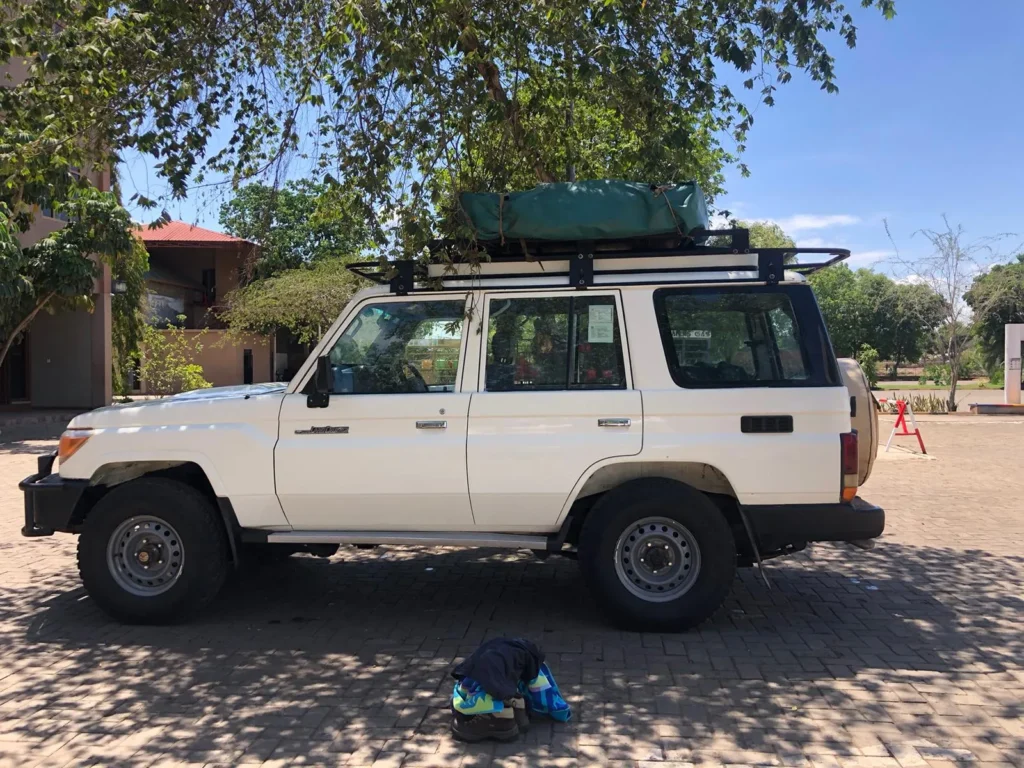
Hard Shell Rooftop Tents
A premium upgrade available with higher-tier rental packages. Hard shell tents use a fibreglass or ABS clamshell design and open with gas-assisted struts in under 60 seconds. They are more aerodynamic (reducing fuel consumption), more secure, and often include built-in LED lighting, USB charging ports, and enhanced insulation. They are ideal for those planning visits to higher-altitude areas like the Udzungwa Mountains or the highlands south of Iringa.
Standard Rooftop Tent Features
- High-density foam mattress (60–80 mm, often memory foam in premium versions)
- Fitted cotton bedding set (sheets, pillow, and duvet/sleeping bag)
- Full-coverage waterproof rainfly with guy ropes
- 360-degree mesh ventilation panels with zip-close covers
- Integrated aluminium extension ladder (anodised and anti-corrosion treated)
- Interior LED strip lighting or headlamp hooks
- Gear pockets and lantern hook inside the tent
- Annexe room option available (ground-level changing room or bathroom enclosure)
What’s Included in a 2-Week Rental Package
Most reputable 4×4 camping rental companies in Dar es Salaam offer tiered packages. A standard 14-day rental typically includes the following:
The Vehicle
- Fully serviced and mechanically inspected Land Cruiser 4×4
- Snorkel for deep water crossings
- Heavy-duty bull bar and rear bash plates
- Roof rack with 80–100 kg load rating
- Recovery gear: Hi-Lift jack (150 cm), two sand tracks/ladders, snatch strap, shackles
- Dual battery system (main starter + deep cycle leisure battery)
- 12V and 240V power inverter for charging devices
- Spare wheel (often two in remote-area packages)
- Basic tool kit and puncture repair equipment
- Fully functional snorkel (mandatory for river crossings in Selous and Ruaha)
The Rooftop Tent & Sleeping
- Mounted rooftop tent with fitted mattress
- Two sets of bedding (sheets, pillowcases, lightweight duvet)
- Ground tent or annex room (in full packages)
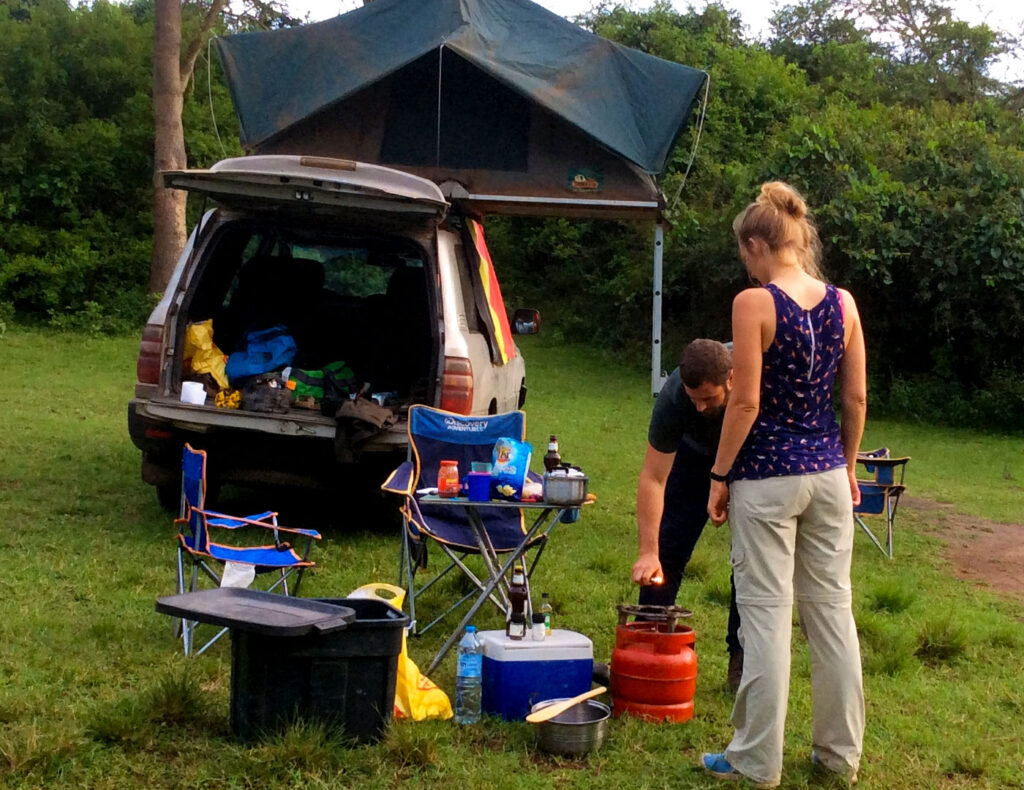
- Camp chairs (2 to 4 depending on party size)
- Foldable camp table
Kitchen & Cooking Equipment
- Two-burner gas stove (MSR, Campingaz, or local brand) with full gas canisters
- Cooking pots set (3-piece), frying pan, and kettle
- Plates, bowls, mugs, cutlery for 2–4 persons
- Washing basin and biodegradable soap
- Cooler box / 40–50L compressor refrigerator (solar-powered in premium packages)
- Water jerry cans (2 x 20L), water filter, and water purification tablets
Navigation & Communication
- Offline maps pre-loaded on tablet or dedicated GPS unit (Garmin)
- Paper maps and Tanzania National Parks atlas
- VHF radio for park ranger communication (in remote area packages)
- Satellite communication device (SPOT or Garmin inReach) in premium packages
Safety & Medical
- Comprehensive first aid kit (bandages, antiseptics, blister packs, medications)
- Fire extinguisher (vehicle-mounted)
- Warning triangles and reflective vest
- Comprehensive travel insurance documentation
Rental Pricing: 2-Week Packages in Dar es Salaam
Prices vary based on the vehicle model, included equipment, whether a driver/guide is provided, and the time of year (high season: June–October). Below is a general pricing guide for the Dar es Salaam market. All prices are in US dollars and are approximate — always request a formal quote from your rental provider.
| Package | Duration | Cost (USD) | Includes |
| Basic Safari | 2 Weeks | $1,400 – $1,800 | Vehicle + Tent |
| Standard Package | 2 Weeks | $1,800 – $2,400 | + Kitchen Kit |
| Full Expedition | 2 Weeks | $2,400 – $3,200 | + Driver/Guide |
| Premium Luxury | 2 Weeks | $3,200 – $4,500 | All-Inclusive |
Note: Prices do not include fuel (diesel averages TZS 2,800–3,200 per litre / ~$1.10–$1.30), national park fees (USD $30–$60 per person per day depending on park), or accommodation within concession areas. Fuel consumption for a loaded Land Cruiser 70 Series averages 11–14 litres per 100 km on dirt roads.
Additional Costs to Budget
- National Park Entry Fees: USD $30–$60/person/day (Ruaha, Nyerere/Selous, Mikumi)
- Camping Fees Inside Parks: USD $20–$40/night (public campsites), USD $60–$150 (private/special campsites)
- Fuel Estimate for 2,500–3,000 km: ~USD $280–$380
- Border/transit fees if crossing to Mozambique or Zambia
- International Driving Permit: varies by nationality
- Travel Insurance: USD $80–$150 for 2 weeks
Suggested 14-Day Itinerary from Dar es Salaam
The following route is designed to showcase the very best of Tanzania’s diverse landscapes and wildlife within a manageable two-week drive. All destinations are accessible by a well-equipped 4×4, though some routes — particularly into Ruaha and Selous — require genuine off-road driving experience.
| Days | Destination | Highlights |
| 1–2 | Dar es Salaam → Mikumi | Vehicle pickup, game drives, zebra & elephant |
| 3–4 | Mikumi → Ruaha NP | Remote wilderness, lions, hippos, baobabs |
| 5–6 | Ruaha → Udzungwa Mts | Hiking, waterfalls, endemic primates |
| 7–8 | Udzungwa → Kilosa | Scenic transit, bush camping |
| 9–10 | Kilosa → Selous (Nyerere) | Boat safaris, wild dog, crocs & hippos |
| 11–12 | Selous → Mafia Island Coast | Beach camping, snorkeling, dhow trips |
| 13–14 | Return to Dar es Salaam | Vehicle return, city debrief & highlights |
Destination Highlights
Mikumi National Park (Days 1–2)
Just 283 kilometres west of Dar es Salaam on the paved A7 highway, Mikumi is the ideal first stop. The open Mkata floodplain is reminiscent of the Serengeti, and game is abundant and easily spotted. Expect to see herds of elephant, zebra, wildebeest, giraffe, impala, buffalo, and lion. The park has designated public campsites with basic facilities — your first night under the rooftop tent with the sounds of the African bush is an experience you will never forget.
Ruaha National Park (Days 3–4)
Tanzania’s largest national park and one of Africa’s most wild and remote destinations. Ruaha is famous for its extraordinary lion population, huge elephant herds, African wild dogs, cheetah, roan antelope, sable antelope, and greater kudu. The Great Ruaha River forms the park’s eastern boundary and is a magnet for wildlife year-round. The drive from Mikumi involves approximately 200 km of dirt road through the Iringa highlands — a proper 4×4 adventure that the Land Cruiser handles with confidence.
Udzungwa Mountains (Days 5–6)
A UNESCO World Heritage-listed biodiversity hotspot, the Udzungwa Mountains rise dramatically from the surrounding plains and harbour endemic species found nowhere else on earth. The Udzungwa Red Colobus and Sanje Mangabey are primates found only in these forests. The Sanje Waterfall trail (7 km return) drops dramatically into a pool ideal for swimming. Camp at the park’s forest campsite and wake to the sound of a thousand birds.
Nyerere National Park / Selous Game Reserve (Days 9–10)
Renamed Nyerere National Park in 2019 in honour of Tanzania’s founding president, this UNESCO-listed wilderness is the largest protected area in Africa and home to the greatest concentrations of elephant, hippo, crocodile, and African wild dog on the continent. The Rufiji River boat safari is one of East Africa’s finest wildlife experiences — floating silently past basking hippos, enormous crocodiles, and fish eagles perched in fever trees. Special campsites along the Rufiji permit wild camping with minimal infrastructure: just you, the river, and the night sounds of Africa.
Legal Requirements & Documentation
Driving Licence Requirements
- A valid national driving licence from your home country
- An International Driving Permit (IDP) — strongly recommended and required by most rental companies
- Minimum age: 23–25 years depending on the rental company
- Minimum of 3 years driving experience
Vehicle Documentation Provided by Rental Company
- Letter of Authority (LOA) — required for crossing district and regional boundaries
- COMESA Yellow Card (Third Party Insurance) — valid across East and Central Africa
- Vehicle Registration Certificate (Logbook)
- Roadworthy Certificate
Recommended Visitor Documents
- Valid passport with minimum 6 months validity
- Tanzania Tourist Visa (USD $50 for most nationalities, available on arrival or e-visa)
- Yellow Fever Vaccination Certificate (required from some countries)
- Travel insurance policy documents
- Emergency contact details and your country’s embassy contacts in Tanzania
Top 4×4 Rental Companies in Dar es Salaam
The following types of companies operate in Dar es Salaam’s 4×4 rental market. Always verify current availability, fleet condition, and pricing directly with providers, as the market evolves frequently.
What to Look for in a Rental Company
- Fleet age and maintenance records — ask to see the last full service report
- 24/7 roadside assistance and a clear breakdown policy
- Comprehensive insurance with defined excess amounts (aim for USD $500–$1,500 excess maximum)
- Flexible drop-off locations if planning a one-way trip
- Customer reviews on Google, TripAdvisor, or overlanding forums
- Membership in the Tanzania Tourism Confederation or similar body
- Clear written rental agreement in English covering damage policy, fuel policy, and mileage limits
Key Questions to Ask Before Booking
- Is the rooftop tent hard shell or soft shell?
- What is the fuel policy — full-to-full or fixed-rate?
- Is a spare wheel included? One or two?
- What happens if I have a breakdown in a remote park?
- Can I cross into neighbouring countries (Mozambique, Zambia, Malawi)?
- Is satellite communication equipment included or available?
- What is the excess/deductible in the event of an accident or theft?
Expert Tips for a Successful 2-Week Expedition
Before You Depart Dar es Salaam
- Conduct a thorough pre-departure inspection with the rental agent — photograph all existing damage
- Test all equipment: stove, rooftop tent opening mechanism, recovery gear, spare tyre pressure
- Download offline maps (Maps.me, OsmAnd, or Gaia GPS) and load park waypoints
- Pre-book at least your first and last campsites — peak season spots fill up fast
- Stock up on supplies in Dar: quality supermarkets include Shoprite, Carrefour, and Game
- Fill both fuel tanks to maximum before leaving the city — fuel availability in remote areas is unreliable
On the Road
- Drive at moderate speed on dirt roads (40–60 km/h) to avoid stone chips on the windscreen
- Always air down your tyres on soft sand (reduce from 35 psi to 20–22 psi)
- Never drive after dark in national parks — it is illegal and extremely dangerous
- Maintain at least 200 metres distance from wildlife at all times
- Use the buddy system — travel with another vehicle if venturing into truly remote areas
- Check river crossing depth with a stick before driving through
At Camp
- Always set up camp before sunset to avoid operating in the dark
- Store all food securely inside the vehicle — never leave food in the tent or outside
- Do not leave shoes or clothing outside the tent — scorpions and spiders are real hazards
- Use biodegradable soap at least 50 metres from any water source
- Extinguish campfires completely with water, not just sand
- Carry out all waste — leave no trace
Health & Safety
- Take anti-malarial medication as prescribed — Tanzania is a high-risk malaria zone
- Apply DEET insect repellent at dusk and dawn — prime mosquito hours
- Drink only filtered or bottled water — never drink directly from rivers or streams
- Carry oral rehydration salts — dehydration in the heat is a serious risk
- Know the nearest clinic or hospital to each park you visit
- Keep a charged phone or satellite communicator for emergencies
Best Time to Visit: Seasonal Guide
Dry Season: June to October (Peak Safari Season)
The best time for game viewing. Vegetation thins out as waterholes dry up, concentrating animals around remaining water sources. Roads are firm and accessible. Temperatures are warm (25–32°C) with cool nights (10–18°C at altitude). Book vehicles and campsites well in advance — demand is highest from July to September.
Short Rains: November to December
Brief afternoon showers, lush green landscapes, excellent bird watching (migratory species arrive), and fewer tourists. Most roads remain passable. Good value season with reduced rates from some rental companies.
Long Rains: March to May
Avoid this period for a rooftop tent safari. Heavy, sustained rainfall makes dirt roads impassable, some parks close entirely, and driving conditions can be genuinely dangerous. Some parks (including parts of Ruaha and Selous) are inaccessible by standard vehicle.
Hot Dry Season: January to February
Hot and dry, excellent for game, and good road conditions. Calving season in many species, which attracts predators. A strong alternative to the peak June–October window with better availability and competitive pricing.
Conclusion: An Unforgettable African Journey
A two-week 4×4 Land Cruiser rooftop tent safari departing from Dar es Salaam is not simply a holiday — it is a life-changing expedition. Sleeping 2 metres above the African earth, waking to the call of a fish eagle, watching the Milky Way arc across a perfectly dark sky above Ruaha, or sitting quietly by the Rufiji River as a pod of hippos surfaces beside you — these moments are why people travel to Tanzania.
The Land Cruiser is the perfect vehicle for this journey: tough enough to handle whatever the road presents, capacious enough to carry everything you need, and reliable enough to give you genuine confidence in remote areas. The rooftop tent completes the picture, freeing you from the constraints of lodges and giving you the freedom to camp wherever the adventure takes you.
Plan carefully, choose a reputable rental company, respect the wilderness and its wildlife, and embrace the unexpected. Tanzania’s landscapes, people, and wildlife will reward every moment of preparation with experiences that will stay with you for the rest of your life.