
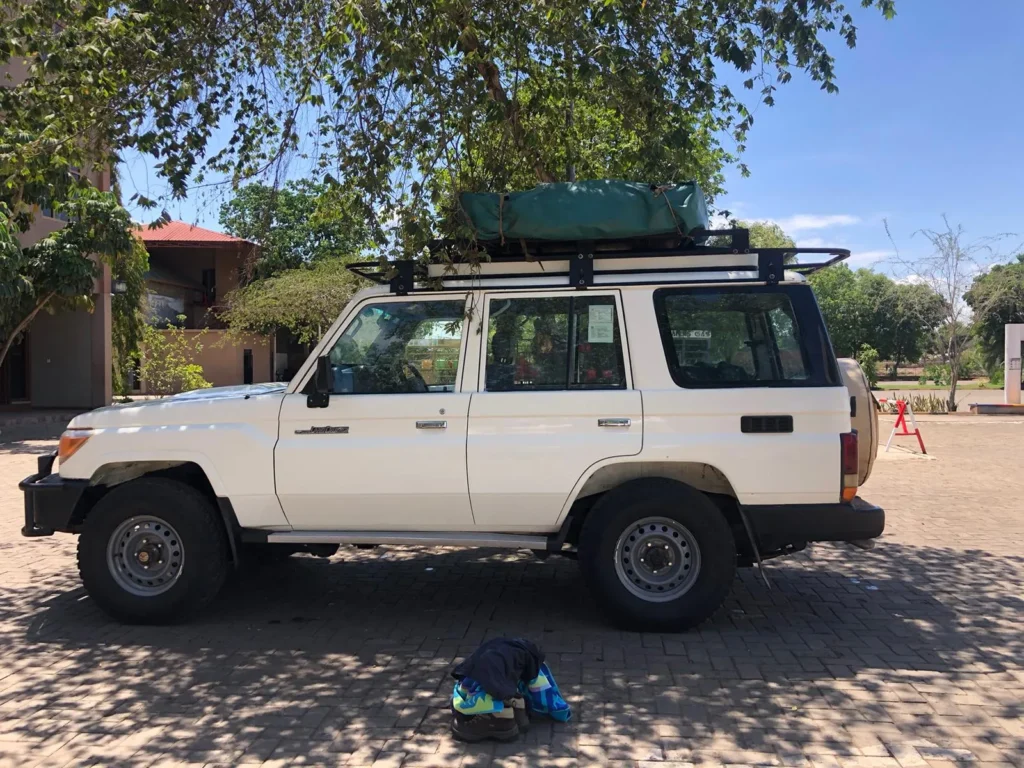
4×4 Land Cruiser with Rooftop Tent Rental in Dar es Salaam
4×4 Land Cruiser with Rooftop Tent Rental in Dar es Salaam, Dar es Salaam — Tanzania’s vibrant commercial capital and bustling coastal gateway — is rapidly establishing itself as one of East Africa’s premier departure points for self-drive overland safaris. At the heart of this growing adventure travel scene is a product that has captured the imagination of explorers worldwide: the iconic Toyota Land Cruiser 4×4, kitted out with a rooftop tent and ready to take you deep into some of Africa’s most spectacular wilderness areas.
Whether you are a seasoned overlander plotting a multi-week traverse across Tanzania’s legendary national parks, a couple seeking a romantic bush escape, or a family in search of an authentic, immersive wildlife encounter, renting a 4×4 Land Cruiser with a rooftop tent from Dar es Salaam offers an unparalleled combination of freedom, comfort, and raw adventure.
This comprehensive guide covers everything you need to know — from vehicle specifications and rooftop tent features to pricing, popular routes, practical tips, and how to choose the right rental company. Read on and start planning the East African safari of a lifetime.
| Why Dar es Salaam?
As Tanzania’s largest city and economic hub, Dar es Salaam offers excellent international flight connections, competitive rental rates, a wide selection of well-maintained fleets, and convenient proximity to southern circuit parks like Selous, Mikumi, and Ruaha — making it the ideal starting point for a self-drive overland adventure. |
Why Choose a 4×4 Land Cruiser for Your Tanzania Safari?
The Toyota Land Cruiser is not merely a vehicle — it is a safari institution. Since its introduction to East Africa in the 1960s, the Land Cruiser has become synonymous with reliability, toughness, and go-anywhere capability. Across the Serengeti’s dusty plains, through Ruaha’s sandy riverbeds, and along the corrugated tracks of the Selous, the Land Cruiser has proven itself the vehicle of choice for professional guides, conservation rangers, and discerning independent travelers alike.
Unmatched Off-Road Performance
Tanzania’s road infrastructure varies dramatically. While the highway from Dar es Salaam to Mikumi is largely tarmac, the routes into Selous Game Reserve, Ruaha National Park, and especially the remote northern circuit parks involve long stretches of unpaved, rocky, and seasonally flooded tracks that demand serious off-road capability.
The Land Cruiser’s high ground clearance, locking front and rear differentials, low-range gearbox, and proven 4WD system give drivers the confidence to tackle these challenging conditions with ease. Its long-wheelbase design provides superior stability on rough terrain, while the legendary 4.5-litre V8 diesel engine delivers ample torque for climbing steep hillsides and navigating deep sand without strain.
Spacious, Practical Interior
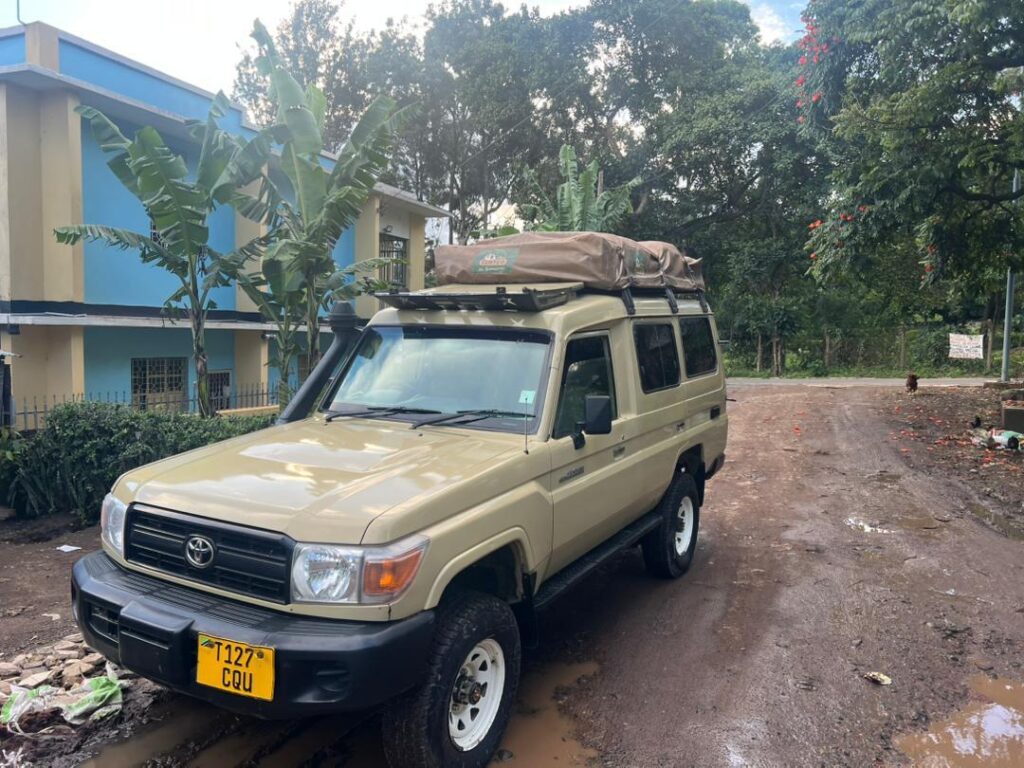
Beyond its mechanical prowess, the Land Cruiser offers a genuinely spacious interior. The standard 78 or 79 series configurations provide generous cargo capacity, allowing you to carry week-long food supplies, camping equipment, fuel jerricans, water containers, and personal luggage without compromising passenger comfort.
Resale Value and Reliability
Rental operators throughout Tanzania invest heavily in Land Cruisers precisely because of their extraordinary reliability and ease of maintenance. Spare parts are widely available across the country, local mechanics are thoroughly familiar with the platform, and the vehicles’ robust construction means mechanical failures in the bush are comparatively rare — a crucial consideration when you are hundreds of kilometers from the nearest town.
The Rooftop Tent: Sleeping Under the African Stars
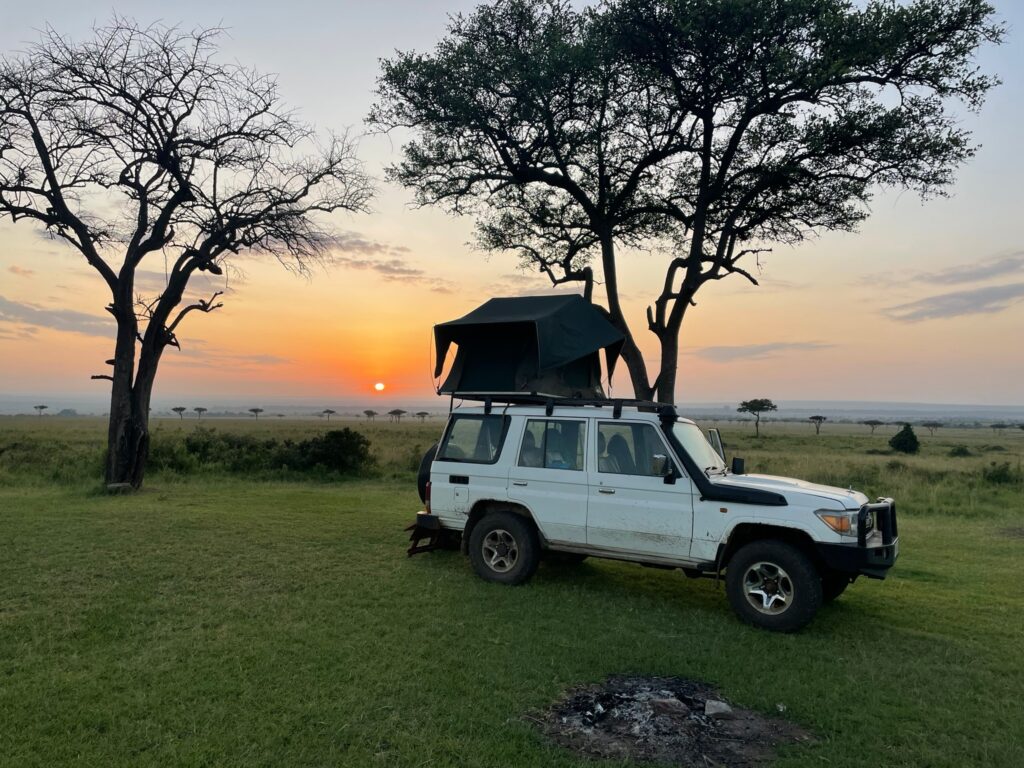
The rooftop tent transforms your Land Cruiser from a day-trip vehicle into a fully self-sufficient mobile bush camp. Instead of scrambling to book lodges months in advance or lugging a heavy ground tent, you carry your accommodation with you everywhere you go — popping it open in minutes and drifting to sleep with the sounds of the African bush just meters away.
How Rooftop Tents Work
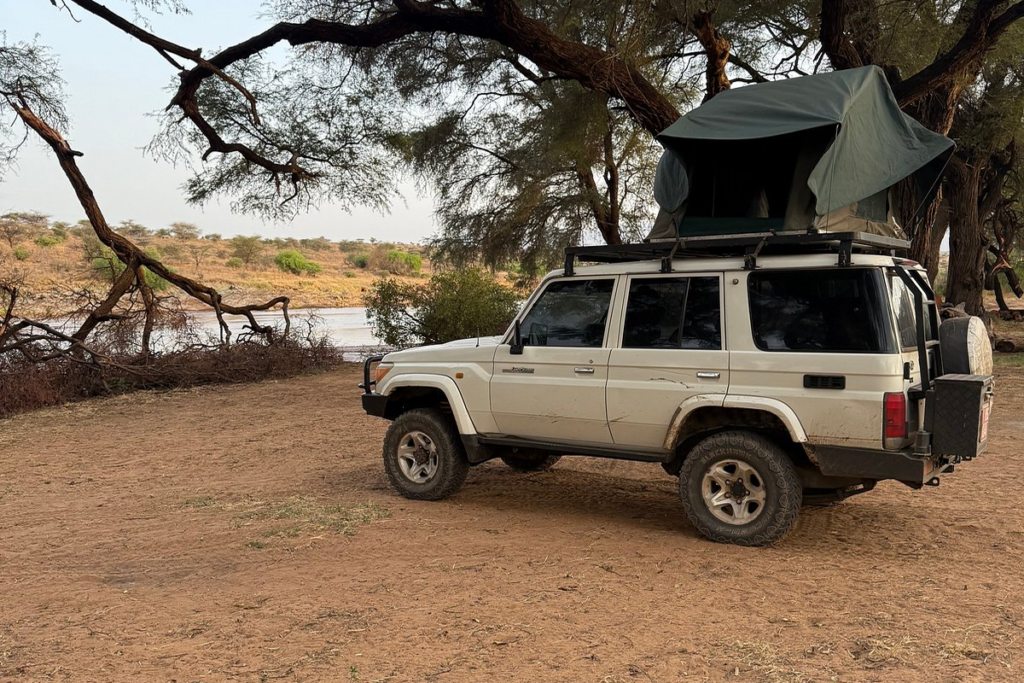
Modern rooftop tents are purpose-built for safari vehicles. They mount securely to the Land Cruiser’s roof rack and fold flat when travelling, adding minimal wind resistance. At camp, unzipping a single cover and unfolding the tent takes just two to three minutes. Most models feature an integrated ladder for safe access, built-in mattress, internal storage pockets, and adequate ventilation through mesh windows to keep insects out while allowing cool breezes in.
Types of Rooftop Tents Available in Dar es Salaam Rentals
Soft-Shell Rooftop Tents
The most common type found on rental vehicles throughout Tanzania, soft-shell tents are lightweight, packable, and cost-effective. They fold down to a very low-profile package and set up quickly. The sleeping surface is typically a 7–10 cm high-density foam mattress offering comfortable sleeping conditions for two adults.
Hard-Shell Rooftop Tents
A premium option increasingly available from higher-end Dar es Salaam rental operators, hard-shell tents use a rigid fibreglass or aluminium shell that pops open with a single gas-strut mechanism in under a minute. They offer superior weather protection, faster setup, and a more refined aesthetic, though they typically add more weight to the roof rack.
Key Features to Look for
- Integrated high-density foam mattress (minimum 60 mm thickness)
- Mosquito-proof mesh windows and entry door
- Waterproof rainfly rated to withstand East African downpours
- Sturdy 3-section telescoping aluminium ladder
- Internal LED lighting for nighttime reading
- Shoe storage pocket at the base of the ladder
- Carrying capacity rated for at least 200 kg
- Proper UV-resistant canvas for extended sun exposure
| Pro Tip: Elevation Matters
Sleeping in a rooftop tent elevates you 1.5 to 2 metres above the ground, providing a natural layer of safety from insects, small nocturnal animals, and ground-level moisture. In campsites within game reserves like Selous, this added elevation can be genuinely reassuring when lions and elephants move through camp after dark. |
Standard Rental Packages: What is Included?
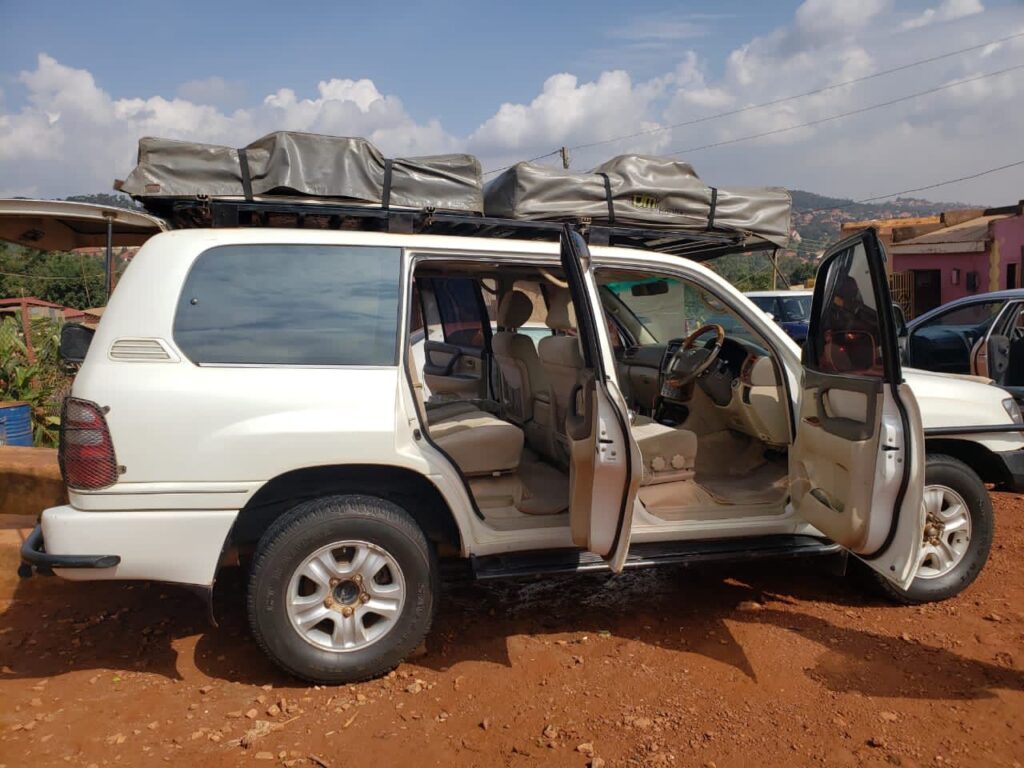
Rental packages from reputable operators in Dar es Salaam are designed to be comprehensively equipped so that you can depart the city and drive straight into the bush without stopping at multiple suppliers. Below is what a well-structured package typically includes:
The Vehicle
- Toyota Land Cruiser 78/79 Series (petrol or diesel — most operators offer diesel for fuel efficiency)
- Full-time 4WD with selectable high and low range
- Roof rack rated to carry the rooftop tent plus additional gear
- Bull bar and underbody skid plates for bush protection
- Recovery kit: high-lift jack, MaxTrax recovery boards, tow strap, shackles
- Two spare tyres (essential for remote bush driving)
- On-board fire extinguisher
- Vehicle safety triangle and reflective vest
The Rooftop Tent
- Quality soft-shell or hard-shell rooftop tent (sleeping capacity 2 adults)
- High-density foam mattress with fitted sheet
- Sleeping bag liners or lightweight blankets (check with operator)
- Aluminium access ladder
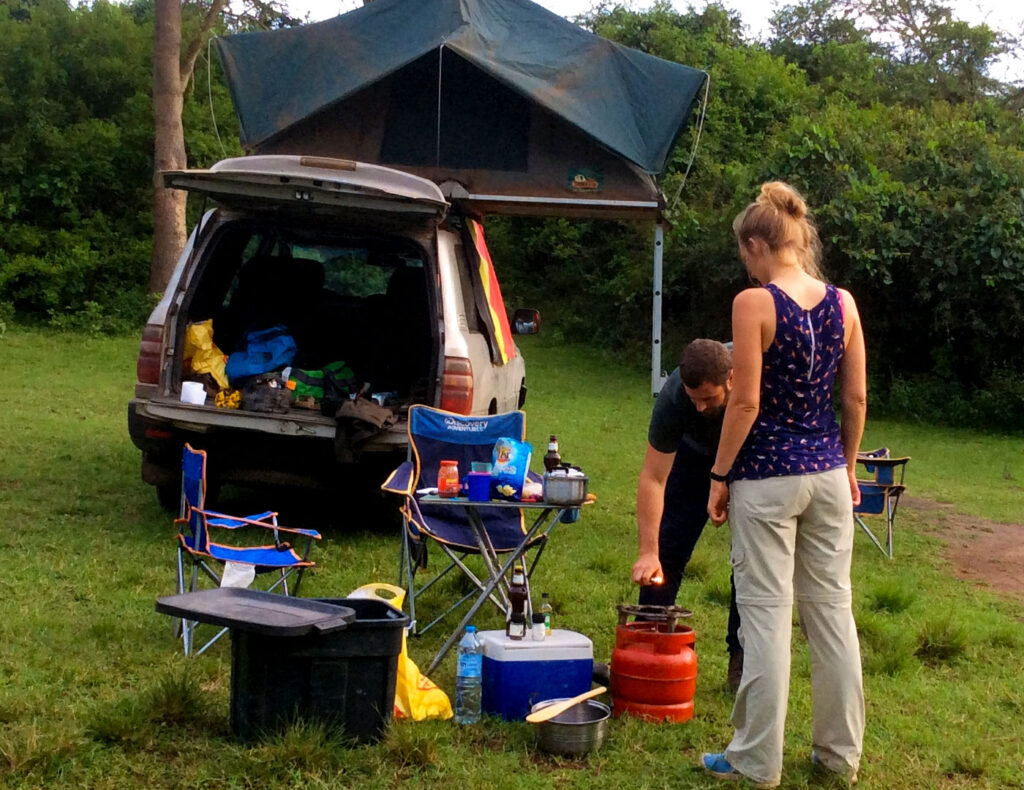
Kitchen and Camp Equipment (Mid-Range and Above Packages)
- 2-burner gas camping stove with spare gas canisters
- Stainless steel cookware set (pot, pan, lid)
- Cutlery, plates, cups for 2–4 persons
- Chopping board and basic kitchen utensils
- Cooler box (15–50 litre capacity depending on package)
- Water storage jerry cans (20–40 litres)
- Washing-up basin and biodegradable soap
Navigation and Communication
- Offline GPS device loaded with Tanzania maps (some operators)
- Paper map of Tanzania national parks
- Emergency contact card with ranger station numbers
- Satellite communicator (optional add-on with premium packages)
Documentation Provided
- Comprehensive vehicle handover checklist
- Proof of insurance documentation
- Park entry fee guidance sheet
- Emergency breakdown contact numbers
- Recommended fuel station list along key routes
Rental Pricing in Dar es Salaam
Rental rates for 4×4 Land Cruisers with rooftop tents in Dar es Salaam are highly competitive compared to other East African capitals, making Tanzania an attractive destination for budget-conscious adventurers who still want premium equipment. Rates typically vary based on rental duration, vehicle model year, and the breadth of equipment included.
| Rental Package | Duration | Price (USD) | Includes |
| Basic | 1–3 Days | $150–$180/day | Vehicle + Tent |
| Standard | 4–7 Days | $130–$150/day | Vehicle + Tent + Kit |
| Adventure | 8–14 Days | $110–$130/day | Full Package |
| Extended | 15+ Days | $90–$110/day | Full + Discount |
Note: All prices above are approximate USD-equivalent indicative rates as of 2024–2025. Actual rates will vary by operator, season, and specific vehicle model. Rates quoted above typically include basic insurance but exclude fuel, park entry fees, camping fees, international border crossing fees, and any optional extras.
Additional Costs to Budget For
- Fuel: Diesel costs approximately TZS 2,800–3,200 per litre. A Land Cruiser consumes 10–14 litres per 100 km on mixed terrain, so budget carefully for longer routes.
- National Park Entry Fees: Adult non-resident fees range from USD 35 to USD 70 per person per day depending on the park. Vehicle fees apply separately.
- Camping Fees: Public campsites inside parks charge USD 30–50 per person per night. Special campsites (exclusive-use) cost USD 50–100 per person per night.
- Insurance Upgrade: Consider comprehensive coverage with reduced excess for total peace of mind in remote areas.
- Satellite Phone/Communicator Rental: USD 5–15 per day for emergency communications in areas without mobile coverage.
- Driver/Guide: If you prefer a guided experience, many operators offer optional driver-guides for USD 60–100 per day.
Top Destinations Accessible from Dar es Salaam
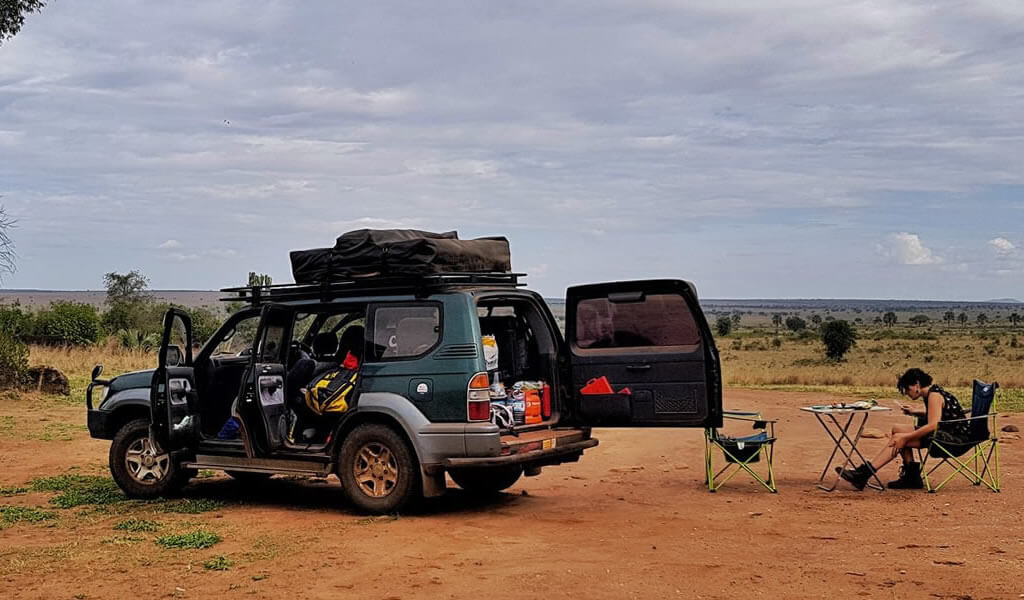
One of the greatest advantages of picking up your rental in Dar es Salaam is the extraordinary diversity of ecosystems and wildlife areas within striking distance. From the sweeping savanna of the Serengeti to the remote wilderness of Ruaha and the Indian Ocean shores of Zanzibar, your options are vast.
| Destination | Distance from DSM | Ideal Duration | Highlights |
| Serengeti National Park | ~1,400 km | 8–10 Days | Wildebeest migration, Big Five |
| Ngorongoro Crater | ~1,000 km | 5–7 Days | Dense wildlife, scenic caldera |
| Selous Game Reserve | ~250 km | 3–5 Days | Remote bush, boat safaris |
| Ruaha National Park | ~620 km | 5–7 Days | Elephants, lions, leopards |
| Mikumi National Park | ~295 km | 2–4 Days | Easy access, diverse wildlife |
| Kilimanjaro Region | ~550 km | 4–6 Days | Mountain views, cultural tours |
| Zanzibar Island | ~Ferry + Drive | 3–5 Days | Beach, snorkeling, Spice Tour |
| Lake Manyara | ~1,050 km | 5–6 Days | Tree-climbing lions, flamingos |
Selous Game Reserve / Nyerere National Park — The Closest Wilderness
For travelers keen to minimise driving time and maximise wildlife, Selous (now partially regazetted as Nyerere National Park) is the outstanding first choice. Located just 250 km southwest of Dar es Salaam — roughly a 4–5 hour drive on the Morogoro road turning south towards Matambwe Gate — Selous is one of the world’s largest game reserves.
Covering over 50,000 square kilometres, Selous offers exceptional populations of elephants, hippos, crocodiles, African wild dogs, lions, and a remarkable diversity of birdlife across its vast floodplains, miombo woodland, and the Rufiji River. Self-drive camping here is a genuine wilderness experience, with far fewer vehicles than the northern circuit parks.
Mikumi National Park — The Perfect Weekend Escape
At just 295 km from the city along the well-maintained Morogoro highway, Mikumi is one of Tanzania’s most accessible parks and an ideal destination for shorter rental periods of two to four days. Often called the ‘Serengeti of the South’, Mikumi’s open floodplains host excellent concentrations of lions, elephants, zebra, wildebeest, buffalo, and giraffe that are highly visible from the vehicle.
Ruaha National Park — Remote and Rewarding
Tanzania’s largest national park, Ruaha sits at the heart of the country approximately 620 km from Dar es Salaam. The drive takes roughly eight hours on a combination of tarmac and murram roads, making it ideal for five-to-seven-day rental packages. Ruaha is renowned for its exceptional elephant herds — some of the largest remaining in East Africa — alongside outstanding populations of lions, leopards, cheetahs, African wild dogs, and over 570 recorded bird species.
Northern Circuit: Serengeti, Ngorongoro & Beyond
For the classic East African safari experience, the northern circuit — encompassing Lake Manyara, Tarangire, the Ngorongoro Conservation Area, and the Serengeti — remains unrivalled. From Dar es Salaam, the drive north takes approximately 14–16 hours, making this route best suited for minimum eight-day rental packages that allow time for the journey as well as game drives.
How to Choose the Right Rental Operator in Dar es Salaam
The quality of your self-drive safari experience depends enormously on the operator you select. Tanzania’s rental market has grown rapidly, and while many companies offer excellent vehicles and service, others cut corners on maintenance, insurance, and equipment quality. Use the following criteria to separate the best from the rest.
Fleet Condition and Age
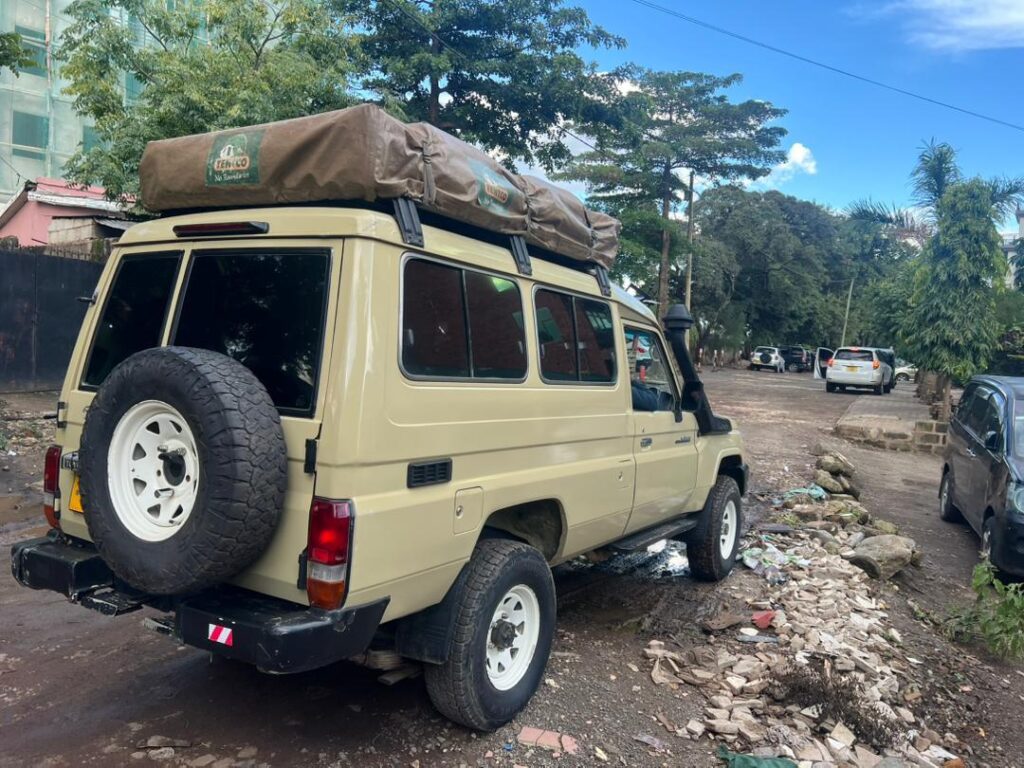
Insist on viewing the actual vehicle (not just a photo) before signing any rental agreement. Check tyre tread depth, all fluid levels, functionality of 4WD engagement, condition of the recovery kit, and the rooftop tent mechanism. Reputable operators maintain vehicles under five years old and conduct thorough pre-rental inspections with the customer present.
Insurance Coverage
Understand exactly what your rental insurance covers. Basic third-party liability is the legal minimum — but for driving in remote bush areas, you need comprehensive coverage. Check the excess (deductible) amount, which can range from USD 500 to USD 3,000 depending on the policy. Some operators offer an excess waiver for an additional daily fee, which is often worth purchasing for genuine peace of mind.
24/7 Emergency Support
Mechanical breakdowns happen. The difference between a minor inconvenience and a trip-destroying nightmare is the quality of your operator’s emergency response. Choose operators who provide a 24-hour emergency phone line, have established relationships with mechanics in key towns along popular safari routes, and offer a vehicle replacement policy in case of serious mechanical failure.
Reviews and Reputation
Check TripAdvisor, Google Reviews, and dedicated overlanding forums such as Africa 4×4 Community for genuine traveler feedback. Look for consistent praise around vehicle reliability, staff helpfulness, and response to problems. A history of successfully handled emergencies is often more reassuring than an absence of issues — it demonstrates that the operator is genuinely prepared.
Transparent Pricing
Beware of suspiciously low headline rates that are then loaded with compulsory extras at collection. A reputable operator will provide a clear, itemised quotation upfront detailing what is and is not included, the fuel policy (full-to-full is standard), mileage limits if any, and the exact scope of insurance coverage.
The Booking Process: Step by Step
Booking a 4×4 Land Cruiser with a rooftop tent in Dar es Salaam is a straightforward process when you follow these steps:
- Define Your Itinerary: Decide which parks you wish to visit, your departure and return dates, and the approximate daily driving distances. This determines the vehicle specification and rental duration you need.
- Request Quotations: Contact a minimum of three reputable operators and request itemised quotations for your specific dates and route. Ensure each quote covers the same scope so comparisons are meaningful.
- Review and Negotiate: Compare quotes carefully, ask clarifying questions on insurance and inclusions, and do not hesitate to negotiate — especially for longer rental periods.
- Pay Deposit: Most reputable operators require a 30–50% deposit to secure the booking, with the balance payable on vehicle collection. Use bank transfer or credit card — be cautious about operators who insist on cash only.
- Pre-Departure Orientation: On collection day, spend adequate time with the operator going through the full vehicle handover checklist, understanding the 4WD controls, rooftop tent setup, and emergency procedures before you drive away.
- Pre-Purchase Park Entry Passes: For popular parks like Serengeti and Ngorongoro, consider booking park entry online in advance through the Tanzania National Parks Authority (TANAPA) portal to avoid queuing at gates.
Practical Tips for a Safe and Memorable Self-Drive Safari
Driving in Tanzania’s National Parks
- Stick to designated tracks at all times — off-track driving is illegal in most parks and causes serious environmental damage.
- Respect all park speed limits, typically 40–50 km/h inside reserves. Speed kills wildlife and increases accident risk on unpredictable terrain.
- Never get out of the vehicle in unfenced game areas unless at a designated picnic site or under supervision of an armed ranger.
- Always carry a full-size printed park map alongside your digital navigation — remote parks have patchy satellite coverage.
- Start your game drives early — most animals are most active in the two hours after sunrise and two hours before sunset.
Camping Safety and Etiquette
- Always follow your campsite warden’s guidance on wildlife activity in the area.
- Never leave food uncovered outside the vehicle — this attracts baboons, hyenas, and other camp raiders.
- Keep all waste in sealed bags and dispose responsibly at designated collection points inside parks.
- Use your campfire or lantern thoughtfully — excessive light can disturb nocturnal wildlife around camp.
- Zip your rooftop tent fully closed at all times when not actively getting in or out.
Health and Safety Essentials
- Consult a travel medicine specialist before departure regarding malaria prophylaxis, yellow fever vaccination requirements, and any other relevant health precautions.
- Carry a comprehensive personal first-aid kit including rehydration salts, antihistamine, broad-spectrum antibiotics (on medical advice), wound care supplies, and any personal prescription medications.
- Drink only bottled or treated water throughout your safari.
- Apply high-SPF sunscreen daily and wear long-sleeved clothing during dawn and dusk to reduce mosquito exposure.
- Ensure you carry comprehensive travel insurance that covers medical evacuation from remote areas — this is non-negotiable for bush travel.
Fuel and Supplies Planning
Fuel planning is critical for remote routes. Carry at least 40 litres of extra diesel in certified jerry cans when travelling to Ruaha, Selous’s remote northern zones, or any area far from the main highway. Stock up on provisions (food, water, snacks) in Dar es Salaam or Morogoro before entering parks, as supplies inside reserves are limited or unavailable.
Best Time to Rent a 4×4 in Dar es Salaam
Tanzania’s climate divides into wet and dry seasons, each offering distinct advantages for the self-drive safari traveler:
Dry Season (June to October)
The long dry season from June through October is universally considered the prime time for self-drive safaris in Tanzania. Vegetation is low, animals congregate around permanent water sources making them easy to locate, and road conditions are at their best. This period also coincides with the famous Great Migration’s river crossing spectacles in the northern Serengeti, drawing visitors from around the world.
Demand for rental vehicles is highest during this period — book at least three to six months in advance for July and August departures to secure your preferred vehicle and dates.
Short Dry Season (January to February)
A shorter dry interlude between the two wet seasons, January and February offer excellent game viewing in the southern circuit parks (Selous, Mikumi, Ruaha) and coincide with the calving season in the Serengeti, when massive concentrations of wildebeest and their newborn calves attract predators in spectacular numbers.
Wet Season (March to May and November to December)
While the wet season brings challenges — some tracks become impassable and self-drive access to certain areas may be restricted — it also delivers lush green landscapes, exceptional birdwatching with migratory species present, and significantly lower rental rates and crowd levels. Experienced 4×4 drivers who embrace the extra challenge will find unique rewards during the green season.
Why Book Your Rental Through a Trusted Dar es Salaam Agency?
With dozens of rental companies now operating in Dar es Salaam, the advantage of working through an established safari specialist — rather than a generic car rental aggregator — cannot be overstated. A specialist agency brings the following to the table:
- Deep destination knowledge: Staff who have personally driven every route you are planning and can advise on conditions, campsites, fuel stops, and hidden gems off the standard tourist trail.
- Pre-vetted, safari-ready vehicles: Fleets that are specifically prepared for bush driving, not regular city rental vehicles repurposed for safari.
- Seamless logistics support: Assistance with park entry fee pre-booking, campsite reservations, border crossing documentation, and route planning.
- Post-trip feedback loop: Reputable operators genuinely want to know how your trip went and use your feedback to continually improve their fleet and service.
- Local emergency network: Established relationships with rangers, local mechanics, and emergency services across Tanzania’s safari regions.
| Ready to Book?
Contact our Dar es Salaam team today to check availability for your preferred travel dates. We offer free, no-obligation quotations and are happy to help you tailor a self-drive itinerary around your interests, experience level, and budget. Early booking is strongly recommended for peak season departures. |
Conclusion
A 4×4 Land Cruiser with a rooftop tent represents the ultimate platform for exploring Tanzania’s extraordinary natural heritage at your own pace, on your own terms. From the moment you leave Dar es Salaam’s busy streets and the city skyline shrinks in your rear-view mirror, to the first evening you unzip your rooftop tent and find yourself face-to-face with an impossibly vast African sky, this is a style of travel that changes people.
The freedom to linger at a lion sighting without clock-watching, to camp inside a national park and experience the full, unfiltered drama of the bush after dark, and to chart your own course through some of the most biodiverse landscapes on earth — this is what 4×4 rooftop tent travel delivers in Tanzania.
Start planning early, choose your operator carefully, prepare thoroughly, and get ready for the adventure of a lifetime.