
Serengeti National Park
Serengeti National Park is the oldest national park in Tanzania, a UNESCO World Heritage Site, a biosphere reserve, and one of the seven wonders of Africa. Serengeti National Park is a renowned wildlife sanctuary, celebrated for its natural beauty and stunning landscapes. Situated in Tanzania’s northern tourism circuit, it boasts the highest concentration of plains game in both Tanzania and Africa.
Serengeti National Park was formed in 1952, making it the first national park created in Tanzania. Serengeti National Park hosts a high concentration of wildlife, including lions, elephants, cheetahs, giraffes, and other bird species, and is renowned for the extraordinary spectacle of the annual migration of wildebeest and zebras.
Serengeti National Park is the second-largest park in Tanzania, encompassing an area of 14,763 square kilometers, equivalent to 5,700 square miles. This area is the largest among the more than 18 national parks in Tanzania, surpassed only by Ruaha National Park, which covers approximately 20,226 square kilometers.
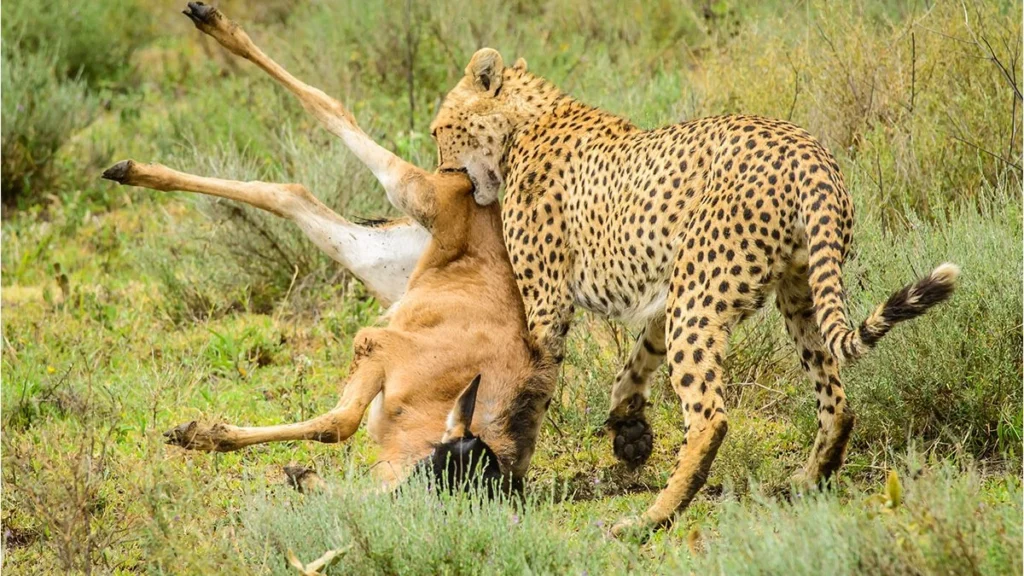
The wildebeest migration is likely the most renowned event in Serengeti National Park, as over one million wildebeest and approximately 200,000 zebras migrate from the northern hills to the south during the short rains in October and November, subsequently moving west to the north following the long rains from April to June. Wildebeest traverse numerous national parks, protected areas, and reserve areas throughout their migration.
Sections of Serengeti National Park
The park is partitioned into four areas, one of which is the Seronera Valley, a renowned area in the southern-central region of the park, referred to by the Maasai as “Serengit,” meaning the endless plain. This sector is distinguished by its classic savannah, acacia trees, and a rich diversity of species.
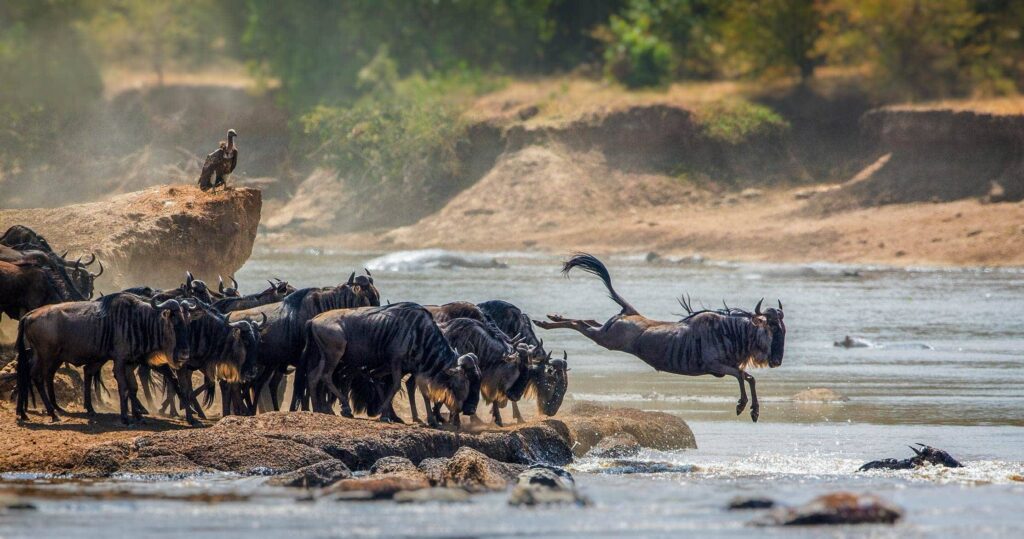
The second segment, known as the Western Corridor, is characterized by the Grumeti River, which the Great Migration traverses from late May to early June. In this corridor, tourists may observe wildebeest navigating past leopards, lions, and Nile crocodiles. This region is also distinguished by an abundance of trees and deep underbrush.
The third segment, located in the northern half of the park, is referred to as the Lobo area, which borders the Maasai Mara Reserve in Kenya. By early July, the migration progresses to a location where the majority of the animals will reside until September. This part contains additional trees and hills and is the least frequented area.
The final segment is the southern Serengeti, characterized by short grass plains and the initiation point of the great migration. From December to March, the population of wildebeest increases, forming a herd in the southern region of the park near Lake Ndutu, which is shared by both the Serengeti and the Ngorongoro Conservation Area.
Attractions in Serengeti
The Big Five—lion, leopard, elephant, buffalo, and rhinoceros—are all present in Serengeti National Park. They entice individuals to engage in game driving and viewing, as many aspire to observe the animals renowned as the “Big Five,” each possessing a rich historical significance.
Wildlife abundance: In addition to the Big Five, numerous other mammals, both large and small, contribute to a park’s capacity to elicit favorable comments regarding tourist pleasure. Included are hippopotamuses, giraffes, impalas, gazelles, warthogs, felines, and several others.
Local inhabitants surrounding the park significantly contribute to attracting tourists by facilitating the organization of cultural trips. Various scholars conduct research on the Maasai tribe, particularly focusing on their culture.
The Great Migration: This may be the primary reason for the global renown of Serengeti National Park, as it is frequently inquired about by numerous travelers. This remarkable natural phenomenon draws numerous individuals engaged in both domestic and international tourism.
A diverse array of avian species entices numerous travelers to Serengeti National Park for birdwatching tourism. The Serengeti is home to turkeys, ostriches, rollers, and numerous other bird species, enhancing the experience for tourists.
Engagements in Serengeti National Park
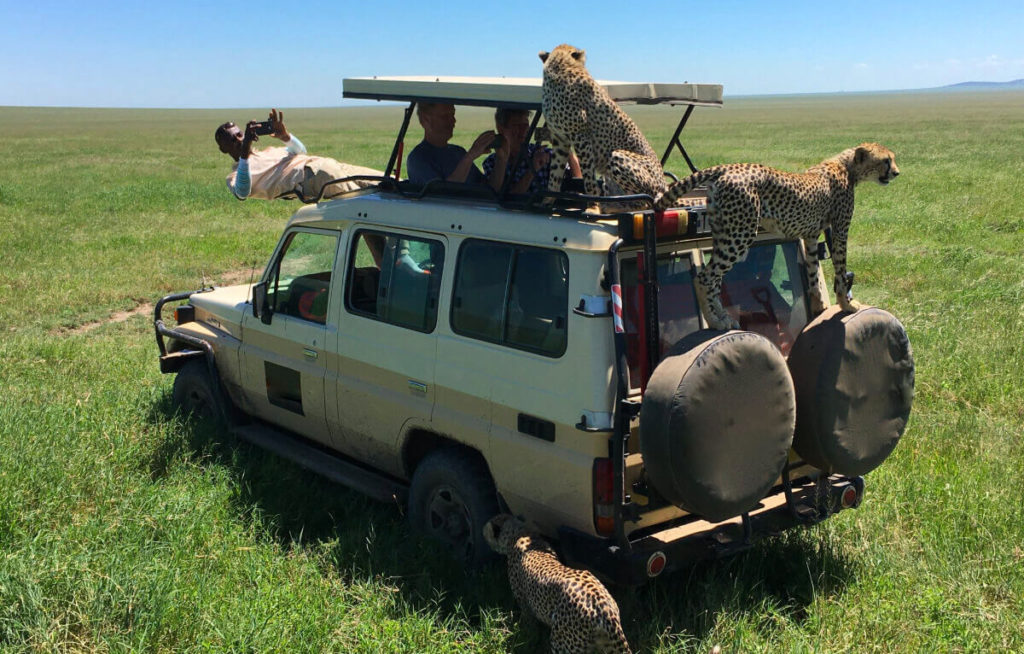
Game driving is the primary reason many individuals frequent the park. The presence of the Big Five and numerous other species in Serengeti National Park attracts visitors, consistently surpassing tourists’ expectations and rendering their experience unforgettable.
Cultural tours: Walking tours are conducted to the Maasai village, allowing visitors to engage with this ethnic group in Tanzania, whose culture is rigorously preserved. Participants will experience the daily life activities and lifestyle of the local inhabitants, including marriage customs, age-set organization, dietary practices, circumcision, and various other Maasai traditions.
Balloon safaris: In the Serengeti, balloon safaris are arranged for tourists seeking this exciting experience in the park. This excursion allows tourists to observe several animals and attractions from an overhead perspective.
Hiking: Naabi Hill consistently offers hiking activities that attract visitors seeking fitness and adventure. Visitors derive immense pleasure from hiking on Naabi Hill, as it provides an exceptional opportunity to visit Serengeti National Park.
Photographic tours: The presence of a picturesque natural environment, along with diverse flora and wildlife, renders it ideal for photography and videography. Tourists that engage solely in this type of activities will achieve maximum satisfaction.
Camping in Serengeti National Park offers a variety of campsites, including standard, luxury, and classic options, where tourists may enjoy comprehensive services by reserving campers or paying varying amounts for the campsite.
Picnic tours: Various locations inside the park are designated as picnic places, where people consistently relish their bush meals while at Serengeti National Park.
The best time to visit Serengeti National Park is year-round, as each season has significant events for tourists to observe and enjoy. In the dry season (May to October), there is a considerable concentration of animals around water sources, facilitating game viewing; nonetheless, the optimal period to observe the big migration of wildebeest is from November to May.
Accessing Serengeti National Park
Serengeti National Park is reachable via both terrestrial and aerial transportation. Tourists utilize 4×4 safari jeeps for road transport, the predominant mode of transit to Serengeti National Park, departing from Kilimanjaro International Airport or Arusha Regional Airport. The journey from Arusha to Naabi Hill at the entrance gate will require approximately 5 to 6 hours, covering a distance of nearly 255 kilometers. The journey from Naabi Hill to the Serengeti National Park headquarters takes around one hour. While self-drive safaris are permitted, they are not advisable.
There are both regional and international flights available via air. Regional airlines comprise Air Excel, Coastal Aviation, and Aviation Air. International airlines include KLM, Turkish Airlines, Ethiopian Airlines, British Airways, Emirates, and others that operate flights to Dar es Salaam, with connections available at Kilimanjaro International Airport. Kilimanjaro International Airport serves as the optimal point of entry, situated between the tourist cities of Arusha and Moshi, from which travelers can access charter flights to the Serengeti. Private fly safaris are scheduled from Arusha Regional Airport to Serengeti National Park, which contains approximately seven airstrips.
Accommodations within Serengeti National Park
Guests need not worry about accommodation, as there are numerous options available both within and outside the park. Within the park, there are several accommodation options, including luxury and standard tented lodges, campsites, rest houses, and hostels. Additionally, adjacent to the park, there are hotels with varying rates, as well as camping sites and lodges, including Serengeti Simba Lodge, Serengeti Soap Lodge, Serengeti Serena Lodge, Lahia Tented Lodge, Kati Kati Tented Camp, Kubu Kubu Tented Camp, Serengeti Explorer Camp, Serengeti Acacia Camp, Acacia Seronea Luxury Camp, Nimali Serengeti, and Nimali Mara Camps.