
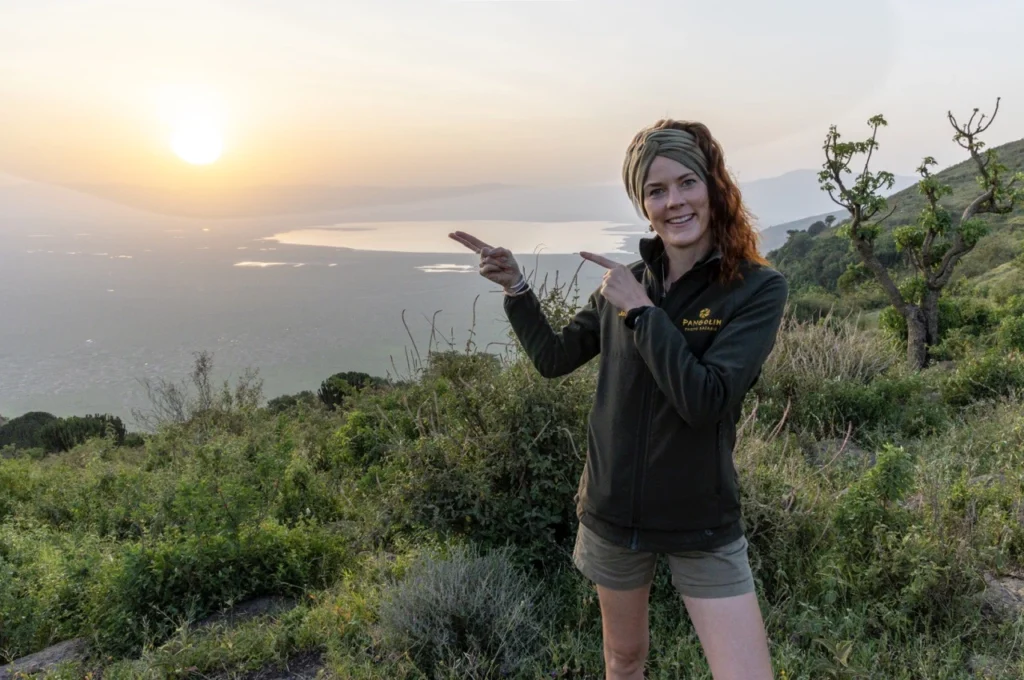
Ngorongoro Crater
The Ngorongoro Crater is a UNESCO World Heritage Site and the largest volcanic caldera on the planet. It is a component of the broader Ngorongoro Conservation Area, which encompasses Olduvai Gorge, woodlands, mountains, and secluded highlands to the north. The region is renowned for its remarkable geological formations, particularly the Ngorongoro Crater, frequently regarded as one of the natural wonders of the world. The entire Ngorongoro Conservation Area was formerly a component of the larger Serengeti National Park until it was designated as a distinct reserve in 1959. The crater is located in northern Tanzania, near the southern border of Kenya, approximately 30 miles away. The renowned film “Out of Africa” was partially shot at the Ngorongoro Crater, so enhancing its visibility and attracting additional tourists to the region.
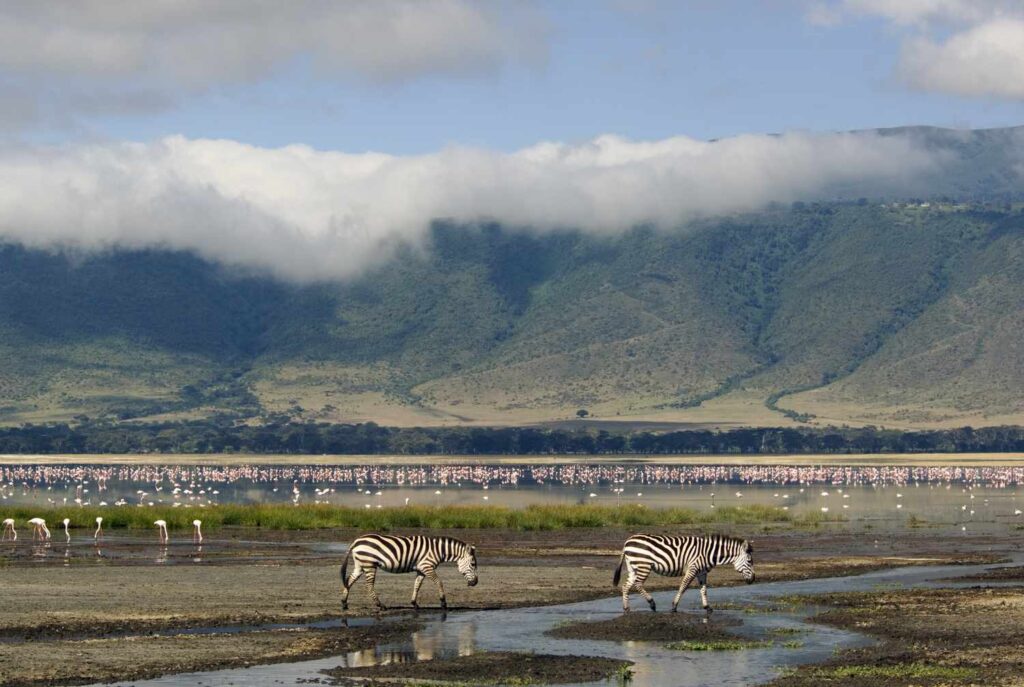
It has an area of approximately 8,292 square kilometers. The crater bottom is approximately 600 meters below the rim and spans over 260 square kilometers. The varied terrain of the Ngorongoro Conservation Area includes the verdant highland forest at the crater’s edge, savannah grasslands, wetlands, and alkaline lakes. The park hosts a diverse range of wildlife, including over 500 species of birds. Furthermore, the Ngorongoro Conservation Area is inhabited by the Maasai people, a semi-nomadic pastoralist tribe celebrated for its profound traditions and dynamic culture.
Things to do Ngorongoro Conservation Area
Tourist activities at Ngorongoro Conservation Area draw thousands of visitors to Tanzania annually. This location is among the premier sites to observe all five of Africa’s renowned mammals: lions, rhinos, leopards, elephants, and buffaloes. The park also hosts other creatures, including hippos, jackals, reedbuck, waterbuck, wildebeest, warthogs, hartebeests, servals, zebras, cheetahs, and crocodiles. More than 26,000 large animals and 500 avian species inhabit the crater. The Ngorongoro Conservation Area was established in 1959 and has a wide span of highland plains, savanna, savanna woods, and forests. The region encompasses the remarkable Ngorongoro Crater, the largest crater globally, and Olduvai Gorge. This page outlines the remarkable tourist activities available on a safari in the Ngorongoro Conservation Area. and these include:
Game Drive:
The game drive is the primary attraction of safaris in the Ngorongoro Conservation Area. The region hosts a diverse array of wildlife species, including waterbucks, African leopards, black rhinoceroses, buffaloes, cheetahs, crocodiles, East African wild dogs, elands, Grant’s gazelles, zebras, hippopotamuses, impalas, lions, oribis, Thomson’s gazelles, topis, and wildebeests, in addition to a variety of avian species. During your game drive tours, you will get the opportunity to observe these creatures in their natural habitat. Game drives are conducted using a normal safari vehicle and are scheduled in two shifts: morning and afternoon. This remarkable journey traverses the Ngorongoro Crater, Ndutu Plains, Sale Plains, Nasere Rock, Embulbul, Olkarien Gorge, and Gol Mountains, among others.
Walking Safaris
Walking safaris are one of the most exhilarating things to engage in during your Tanzania safari in the Ngorongoro Conservation Area. This activity is conducted on foot, providing an opportunity to investigate places overlooked during a conventional game drive. During your walking trips, you will experience stunning vistas, observe fauna, and interact with the local populace.You will investigate regions such as extinct volcanoes and captivating landscapes while acquiring knowledge about the Maasai, Datoga, and Hadzabe tribes.
This exceptional walking safari will lead you to notable locations, including the renowned Ngorongoro Crater, the tallest intact caldera globally. You will have the opportunity to traverse the breathtaking crater rims of Empakaai Crater and Olmoti Crater, or ascend picturesque summits such as Mount Makarot and Mount Lolmalasin. Additional intriguing locations encompass the Gol Mountains, the historic Olduvai Gorge, and the tranquil Elephant Caves, all situated inside the verdant highlands of the protected region. Most walks are feasible, requiring under four hours, with alternatives for extended hikes.
Archaeological Tours:
The Ngorongoro Conservation Area is both a remarkable natural marvel and a site of significant historical and archaeological value. Designated as a UNESCO World Heritage site, it features numerous significant archaeological sites ideal for exploration and teaching. This site features significant sights like as Olduvai Gorge, where ancient human remains were unearthed, and the Laetoli Footprints, which offer insight into prehistoric existence.Your Archaeological Tours will include visits to Engaresero Footprints, Mumba Caves, and Engaruka, each location unveiling intriguing narratives from history and providing an opportunity to further your understanding of early human existence.
Cultural Tours:
Engage in a cultural exploration within the Ngorongoro Conservation Area, an excellent opportunity to discover the distinctive traditions of the region’s indigenous groups, including the Maasai, Hadzabe, and Datoga tribes. The Maasai, recognized for their unique traditions, have inhabited this region since their migration from the Nile in the 18th century.
The Datoga are pastoralists, whilst the Hadzabe constitute a diminutive community of hunter-gatherers residing adjacent to Lake Eyasi. Engaging with these communities provides an opportunity to see their lifestyle directly. During your cultural excursions, you may explore traditional Maasai bomas (villages), where you will gain insights into their intriguing culture, capture amazing photographs, and purchase native handicrafts as mementos.
Olduvai Gorge:
A visit to Olduvai Gorge is essential for history and archaeology aficionados during a safari in the Ngorongoro Conservation Area.This prominent archeological site, commonly known as the “Cradle of Mankind,” is celebrated for its fossil discoveries, including some of the first identified hominid bones.A guided tour of the Gorge presents tourists with the intriguing narrative of human development, emphasizing the findings made by researchers such as Louis and Mary Leakey. The visitor center has educational exhibits on the geological and ecological history of the region, along with a comprehensive timeline of human ancestry. Strolling around the Gorge, visitors can admire the striking terrain while contemplating the development of early humans in Africa. During your tour, you will have the opportunity to visit a small museum established for public exhibition, which houses unearthed bones and artifacts for travelers to observe.
Botanical Tours:
If you possess a fervor for botany, contemplate participating in a botanical tour within the Ngorongoro Conservation Area. This region hosts numerous plant species, each enhancing the local environment and aesthetic appeal. These trips commemorate the diverse flora present and underscore the significance of environmental conservation. During your botanical tour, you will get knowledge about many plants and their functions within the environment. This collection comprises distinctive and representative catalogs that are vital for education, scientific endeavors, exhibitions, and tourism.
Birdwatching
The Ngorongoro Crater is among the premier locations for avian observation in Tanzania. The park hosts more than 500 avian species. The park comprises grassland plains, lakes, marshes, and hills that offer habitats for diverse avian species. While participating in birdwatching excursions in the Ngorongoro Conservation Area, you will have the opportunity to observe vibrant avian species including flamingos, Kori bustards, crowned cranes, speckled pigeons, red-eyed doves, yellow-throated sandgrouse, black-billed bustards, white-browed coucals, Abyssinian nightjars, African swifts, and Eurasian moorhens. From the crater rims, one can witness species such as the African citril, forest buzzard, golden-winged sunbird, and slaty white-eye, among others.
Best Time for Visiting Ngorongoro Conservation Area
The Ngorongoro Conservation Area boasts a remarkable amalgamation of cultural heritage, wildlife, and landscapes, featuring the Ngorongoro Crater, the biggest intact volcanic caldera globally. Visits are permissible year-round; however, conditions vary by season, and if you have particular interests, the timing of your visit can be significantly impactful.
The dry season, spanning from June to October, is regarded as the optimal period for animal observation. Animals are more readily observable due to reduced flora and precipitation, with many congregating within the crater in pursuit of sustenance and hydration. Visitors may anticipate observing substantial herds of buffalo, zebra, elephant, rhinoceros, lion, and wildebeest. The evenings are colder, and the climate is typically sunny and agreeable. Reservations must be made well in advance to ensure lodgings and Tanzania excursions, as this period is the peak travel season.
The wet season in the Ngorongoro Crater has two different intervals: the short rains (November to December) and the long rains (March to May). A brief and gentle precipitation during this season transforms the crater into a verdant oasis. This season presents excellent opportunity for avian observation, as it coincides with the peak of migration. The wet season is especially significant in January and February, since the wildebeest calving season attracts predators and offers amazing wildlife vistas. The rainy season attracts several travelers, as national parks generally have reduced visitation due to potential rain-related complications, such as muddy roads and impaired vision, from March to May.
Location of Ngorongoro Conservation Area
The Ngorongoro Conservation Area is situated in northern Tanzania within the East African Rift Valley, approximately 180 km (112 miles) west of Arusha, a principal gateway city for northern safari circuits. The region encompasses about 8,000 square kilometers (3,200 square miles) and is vital to the Serengeti ecosystem, which includes Serengeti National Park and other wildlife reserves. The most prominent characteristic is the Ngorongoro Crater, the biggest complete volcanic caldera globally, serving as a natural habitat for thousands of wildlife.
Ngorongoro is located at the intersection of several of Tanzania’s most renowned tourism regions. To the west lies the Serengeti, renowned for the Great Migration; to the east are Lake Manyara and Tarangire National Park. The conservation area is integral to the Northern Safari Circuit, making it an ideal inclusion in most Tanzania safari itineraries. It is conveniently accessible by road from Arusha, taking approximately 3 to 4 hours by car, and numerous people opt for either a day trip to Ngorongoro or a multi-day expedition encompassing more parks.
Ngorongoro is both strategically situated and culturally and archaeologically significant. Adjacent to the Olduvai Gorge, commonly known as the “Cradle of Mankind,” where some of the oldest human fossils have been discovered, Ngorongoro also hosts the Maasai people who reside and graze livestock within the conservation area. These factors, coupled with its breathtaking scenery and exceptional wildlife habitat, unequivocally position Ngorongoro among the premier destinations in Africa.
Accessing the Ngorongoro Conservation Area
Accessing the Ngorongoro Conservation Area is quite straightforward, particularly for those traversing Tanzania’s Northern Safari Circuit. The nearest significant city is Arusha, serving as the main departure hub for the majority of Tanzania safaris. The city is accessible via several domestic flights through Kilimanjaro International Airport (JRO) or Arusha Airport (ARK), in addition to international flights. Upon your arrival in Arusha, you must drive to Ngorongoro, which is predicted to take approximately 3.5 to 4 hours, contingent upon road conditions. The route primarily consists of a well-constructed paved road that traverses picturesque scenery and passes notable attractions, including Lake Manyara.
The majority of guests reach Ngorongoro via an organized safari package, which encompasses a guide, a driver, transportation in a 4×4 vehicle, park fees, and lodging. These packages will likely encompass Ngorongoro alongside an additional destination (Serengeti National Park, Tarangire, Lake Manyara), so creating a comprehensive trip itinerary. Charter flights from Arusha or nearby airstrips facilitate access to Ngorongoro from the Serengeti, with the Lake Manyara Airstrip offering a mere few hours’ drive. Alternatively, if inclined, one may drive from Arusha.
Independent travel is infrequent due to the region, and it is advisable to employ a local driver-guide to enhance access to the area, facilitate entry into the crater, and optimize wildlife observation opportunities. Regardless of whether you arrive by road or air, the expedition to Ngorongoro constitutes merely a segment of the adventure, presenting striking vistas, cultural engagements, and an exceptional safari experience ahead.